Coimbatore
08048068921

belt conveyors

6814772a5d263414004dd4a4 Card 2

product image
Belt Conveyors

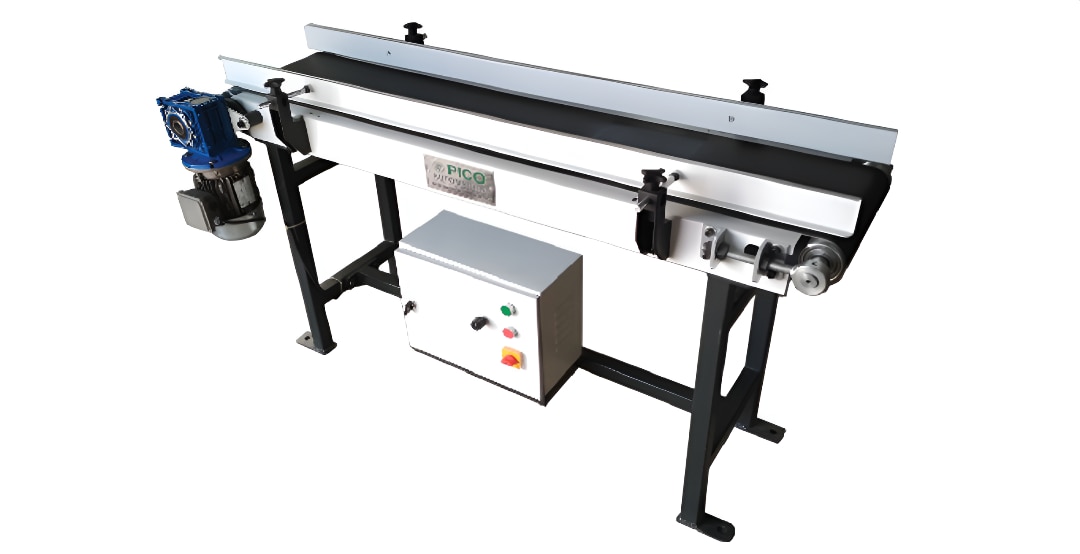
The system relies on a loop of belt wrapped around two main pulleys at either end: The Drive Pulley: Connected to an electric motor, this pulley uses friction to pull the belt forward. The Tail Pulley: An idle roller at the opposite end that provides tension and ensures the belt stays tracking in a straight line. The Support Bed: Underneath the moving belt sits either a solid sheet of metal (Slider Bed) for light loads or a series of rollers (Roller Bed) to reduce friction for heavier loads. Key Features & Advantages Smooth and Continuous Transport: Because the surface is entirely flat and seamless, it provides an exceptionally stable ride. This prevents small, delicate, or oddly shaped items from tipping over or falling through gaps. Versatility: Can transport a vast array of product types—from tiny electronic components and loose parts to heavy cardboard boxes and packaged foods. Variable Speed & Control: Easy to integrate with variable frequency drives (VFDs) to precisely control production speeds, slow down for manual inspection, or speed up for sorting. Cost-Effective: Simple design translates to lower upfront engineering and manufacturing costs compared to complex modular or powered roller networks. Common Applications Flat belt conveyors are the foundational backbone of general manufacturing and logistics: Packaging & Shipping Lines: Transporting sealed boxes, mailers, and envelopes through labeling, taping, and taping machines. Assembly Lines: Moving electronics, appliances, or consumer goods gradually past assembly workers or robotic arms. Inspection & Sorting Zones: Providing a steady, flat workspace for quality control inspectors to review products or scan barcodes. Food & Pharmaceutical Packaging: Using specialized food-grade polyurethane (PU) belts to transport wrapped snacks, bottled medications, or personal care products safely. Limitations to Consider No Accumulation: Items cannot back up or queue up on a standard flat belt while it's moving. If a box stops, the friction of the moving belt underneath will cause the packages to crash, pile up, or damage the bottom of the product. Strict Tracking Maintenance: The belt must remain perfectly centered. If the tension is uneven, the belt can drift to one side, causing frayed edges and structural damage over time.

6814772a5d263414004dd4a4 Card 2

product image
Belt Conveyors

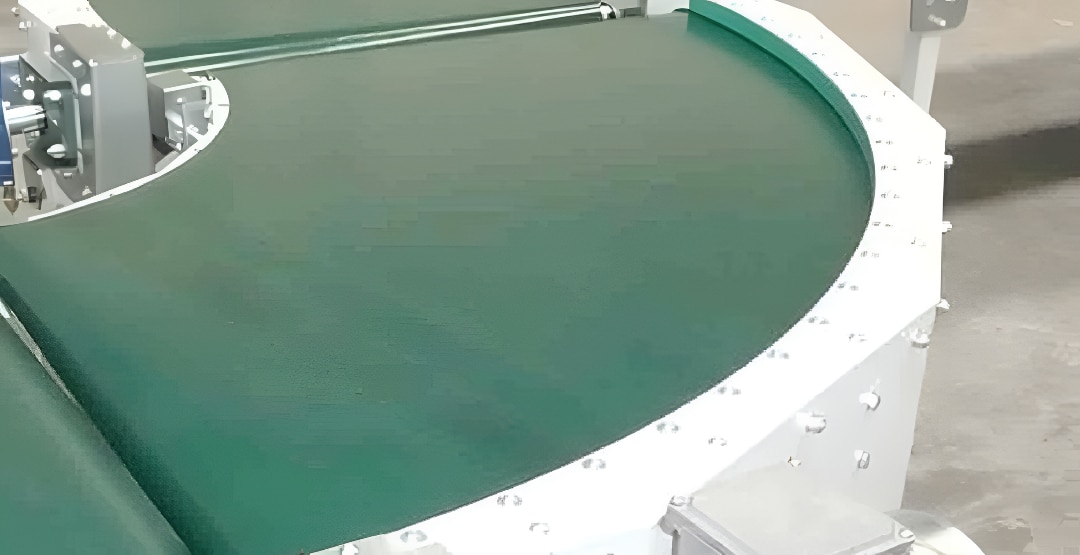
Because the outside edge of a 90-degree turn is longer than the inside edge, a standard straight conveyor belt cannot be bent into a curve; it would bunch up on the inside and stretch or snap on the outside. To solve this, a 90-degree conveyor uses a conical (tapered) pulley design combined with a pre-shaped, curved belt. The drive pulleys are wider on the outside diameter and narrower on the inside. This allows the outside of the belt to travel faster than the inside, ensuring that products move uniformly around the bend without slipping or spinning. Key Features & Advantages Maintains Product Orientation: If a box enters the curve facing forward, it exits the curve facing forward. This is critical for automated lines featuring barcode scanners, label applicators, or vision inspection systems that require products to be in a precise position. Smooth, Gentle Transfers: Because the transition is seamless, it prevents fragile items (such as glassware, delicate electronics, or unpackaged food items) from jarring, tipping over, or bumping into each other. Positive Belt Tracking: To prevent the immense centrifugal force from pulling the belt toward the inside of the turn, the belt is physically locked into the frame. This is usually achieved using sealed bearings, guide rollers, or a continuous chain/bead guide sewn directly into the outside edge of the belt. Space Optimization: It allows factories and warehouses to maximize their floor space by routing production lines around structural pillars, walls, or into tight “U-shape” and “S-shape” room configurations. Common Applications 90-degree belt conveyors are vital junction points used to connect separate legs of an automation system: Airport Baggage Handling: Safely navigating checked luggage and bulky suitcases through tight terminal walls from the check-in desk to the sorting area. E-commerce & Distribution Hubs: Routing cardboard shipping boxes out of a main sorting vein into a specific 90 ∘ shipping lane or dock door. Food & Beverage Production: Moving baked goods, bottles, or canned items through processing, filling, and packaging areas without causing them to spill or crash. Manufacturing Assembly Lines: Guiding components around a workspace to form continuous loops, ensuring a constant workflow for assembly workers.

6814772a5d263414004dd4a4 Card 2

product image
Belt Conveyors

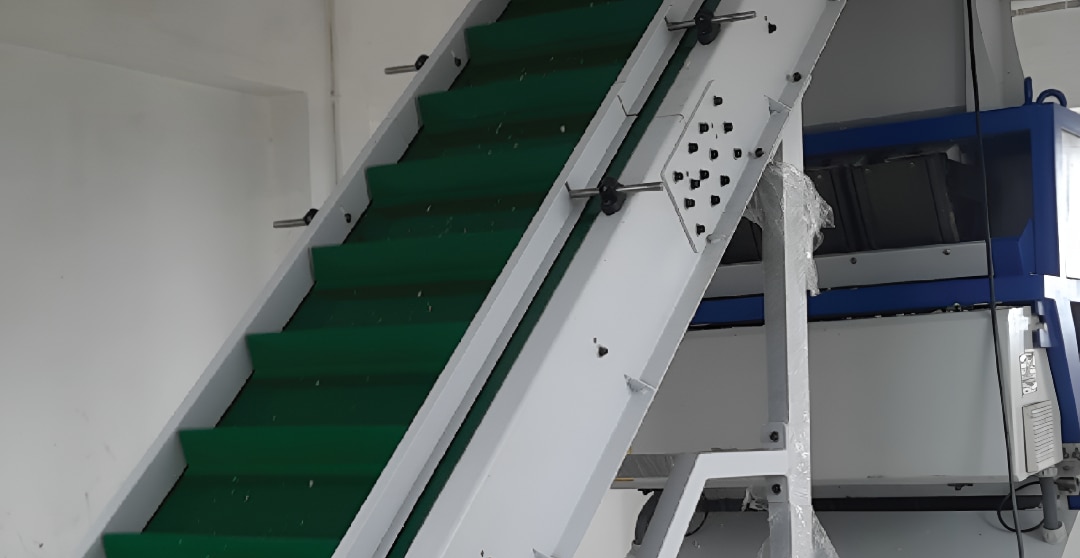
The core mechanism is similar to a standard flat belt conveyor, but the belt surface is structurally modified. As the motorized belt moves, the cleats create physical compartments. On an incline: The product rests against the front face of the cleat, preventing gravity from pulling it downward. On a decline: The cleats act as brakes, gently regulating the speed of the product as it moves down a slope. Key Features & Advantages High-Incline Transport: Standard flat belts max out at around a 15 -degree to 20 -degree angle before items slip. Cleated belts can comfortably handle angles from 20 -degree up to 45 -degree (and even steeper when paired with specialized side walls). Space Efficiency: Because it can lift items at steeper angles, it requires significantly less horizontal floor space to bridge vertical heights compared to a standard gradual incline conveyor. Precise Product Spacing (Indexing): Cleats create uniform pockets. This allows the conveyor to feed items into packaging or sorting machines one at a time at a perfectly timed cadence. Common Applications Cleat belt conveyors are widely utilized across industries that deal with bulk items, loose parts, or multi-level building layouts: Food Processing & Agriculture: Elevating raw fruits, vegetables, nuts, or grains up into washing hoppers, blenders, or sorting stations. Manufacturing & Stamping: Carrying small metal parts, plastic molded components, or hardware screws out of a drop chute up into large storage bins. Packaging Lines: Transporting loose pouches, candy bars, or small cosmetics up to a top-level sealing or cartoning machine. Recycling & Waste Management: Moving shredded plastics, crushed aluminum cans, or glass shards out of floor-level sorting pits into processing machinery.

6814772a5d263414004dd4a4 Card 2

product image
Belt Conveyors

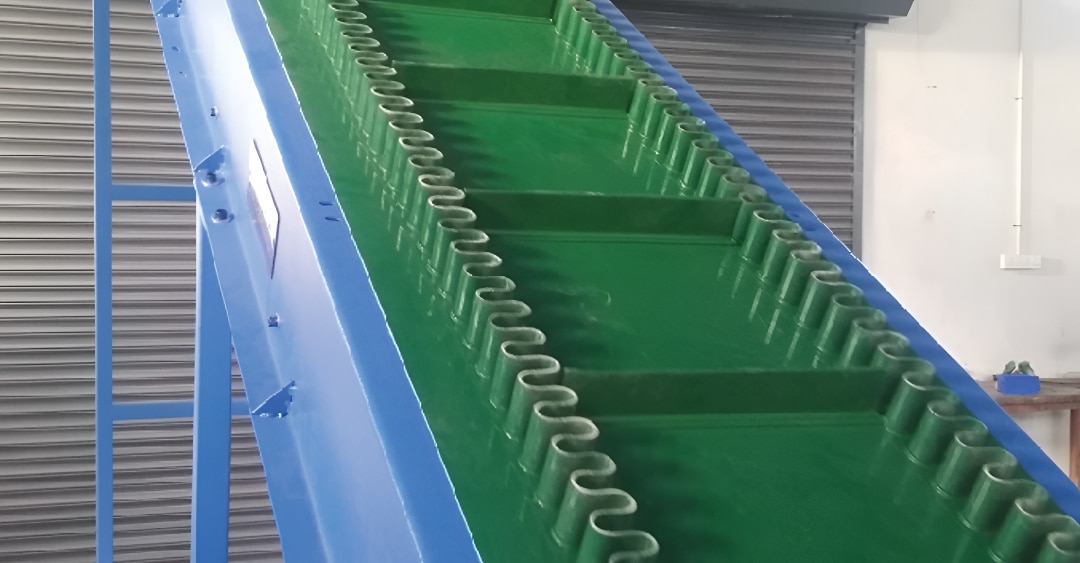
The system relies on a uniquely engineered three-part composite belt:The Base Belt: A high-rigidity rubber or PVC belt that provides the cross-stabilization needed to handle the tension of vertical lifting without bowing or twisting.Corrugated Sidewalls: Flexible, accordion-like rubber walls bonded to both edges of the belt. These walls compress and expand dynamically as the belt travels around the end pulleys, preventing materials from spilling off the sides.Integrated Cleats: Transverse fabric-reinforced rubber ribs (usually T-shaped, C-shaped, or scoop-shaped) bolted or vulcanized across the belt between the sidewalls. These act as pockets or shelves to catch and lift the material vertically.Key Features & AdvantagesExtreme Incline Angles ($0^circ$ to $90^circ$): While standard conveyor belts max out at around a $20^circ$ incline before items slide backward, sidewall conveyors can lift materials completely vertically.Massive Space Savings: Because it can lift materials straight up, a sidewall conveyor requires a fraction of the horizontal floor space compared to a long, gradual incline ramp.Zero Spillage at Transfer Points: The “pocketed” nature of the belt completely seals the product in place, minimizing product degradation and keeping dust and debris off the factory floor.Single-Drive System: A single sidewall belt can transition smoothly from horizontal loading, to a vertical climb, and back to a horizontal discharge—all powered by one motor. This eliminates the need for multiple independent conveyors and risky product transfer points.Common Configurations (The S-Shape Layout)Because the belt is flexible yet structurally rigid, these systems are highly valued for their “S-Shape” or “Z-Shape” configurations:The Bottom Horizontal: Materials are smoothly loaded onto a flat, horizontal section.The Vertical Curve: The belt curves upward to a sharp incline, pocketing the material securely.The Top Horizontal: The belt levels off again at an elevated height to cleanly dump the material into a silo, hopper, or truck.

6814772a5d263414004dd4a4 Card 2

product image
Belt Conveyors

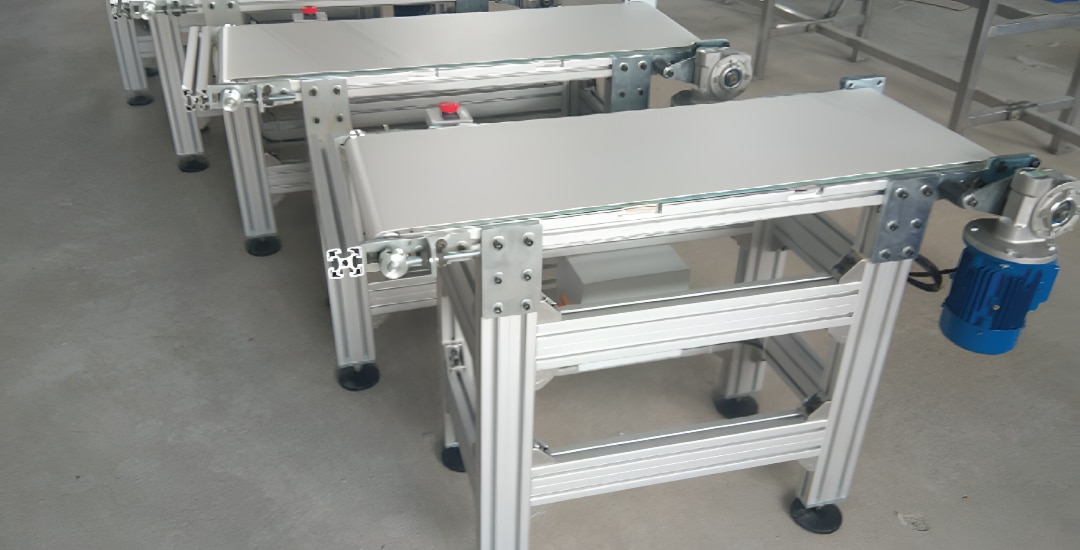
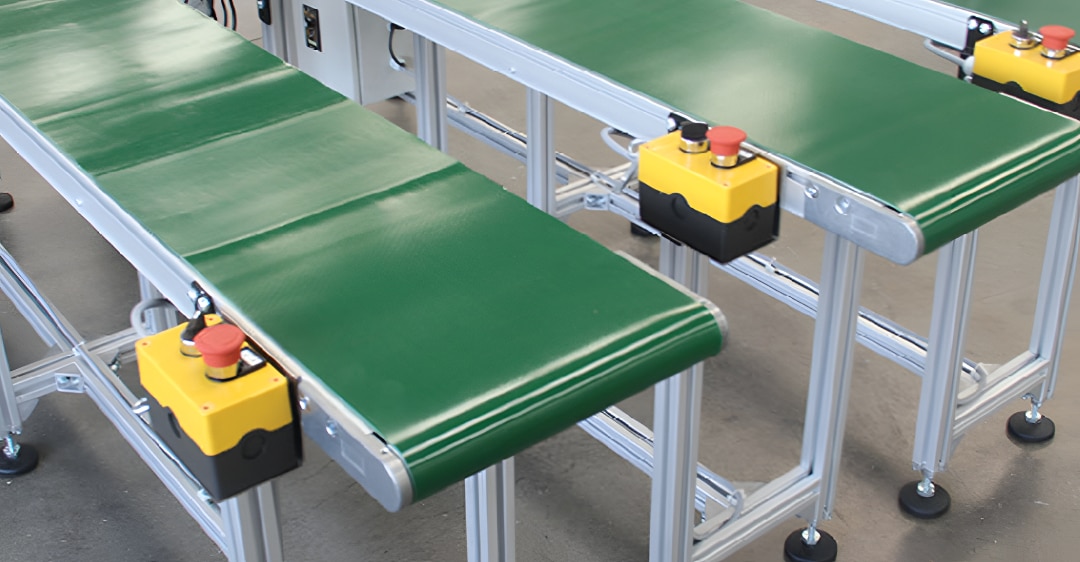
An Aluminium Profile Conveyor (often called an aluminum extrusion conveyor) is a highly modern, modular material handling system built using structural aluminum frameworks instead of traditional welded sheet steel. Rather than being a specific type of belt or roller mechanism, “aluminium profile” refers to the structural backbone of the conveyor. These systems are incredibly popular in automation, electronics assembly, pharmaceuticals, and packaging due to their clean aesthetics, lightweight nature, and extreme flexibility. Key Features & Advantages Modular “T-Slot” Design: The structural aluminum beams feature continuous grooves (T-slots) running along their entire length. This allows engineers to easily bolt on sensors, guide rails, barcodes scanners, or robotic arms anywhere on the frame without drilling or welding. Lightweight yet Strong: Aluminum has a high strength-to-weight ratio. These conveyors are easy to move, reconfigure, or suspend from ceilings, yet rigid enough to handle precision automation. Corrosion Resistant & Clean: Unlike steel, anodized aluminum does not rust, chip, or require painting. This makes it ideal for cleanrooms, medical packaging, and electronic manufacturing where paint flakes or rust could ruin a product. Rapid Assembly and Alteration: Because the components bolt together like an Erector set or LEGOs, a team can assemble, extend, shorten, or completely reconfigure the conveyor's layout in a fraction of the time it takes to modify a welded steel conveyor. Common Applications Aluminium profile conveyors are the go-to choice for high-tech, precision, and clean industrial sectors: Electronics & Semiconductor Assembly: Moving delicate circuit boards, microchips, and smartphones through automated testing and robotic soldering cells. Pharmaceutical & Medical Device Packaging: Transporting syringes, pill bottles, and medical kits through sterile cleanroom environments. Automated Inspection & Vision Systems: The rigid, vibration-dampening aluminum frame ensures that high-speed cameras can scan moving products without blurry images. E-commerce & Light Packaging: Sorting and routing small pouches, cosmetics, or consumer goods through dynamic fulfillment centers.

6814772a5d263414004dd4a4 Card 2

product image
Belt Conveyors

Products (such as empty boxes, plastic bottles, or pouches) are placed onto a high-grip belt. As they pass through a designated “printing zone,” a photo-eye sensor detects the leading edge of the product. This triggers an industrial printer mounted to the conveyor frame to spray ink or fire a laser at the exact microsecond required, applying crisp text or graphics while the item is in motion. Key Features & Advantages Vibration-Free Motion: Built with heavy-duty aluminum or steel frames and perfectly balanced rollers to eliminate the micro-vibrations that distort printed codes. Integrated Printer Mounts: Features built-in, highly adjustable brackets designed to hold printheads (like Videojet, Domino, or Linx systems) at the exact distance and angle needed from the product. High-Grip, Anti-Static Belts: Typically uses seamless PVC or rubber belts that prevent items from slipping or sliding during acceleration, ensuring consistent spacing between products. Variable Speed Control: Equipped with precise digital speed controllers (VFDs) so the conveyor speed can be perfectly synchronized with the printing frequency (dots per second) of the printhead. Common Applications Printing belt conveyors are critical checkpoints in packaging lines across almost every consumer goods industry: Pharmaceuticals: Printing tracking serial numbers, QR codes, and manufacturing dates onto medicine boxes or pill bottles for regulatory compliance. Food & Beverage: Applying “Best Before” dates onto milk jugs, snack bags, and beverage cans right before they are packed into larger shipping boxes. Cosmetics & Personal Care: Coding batch numbers onto the bottoms of shampoo bottles or tube crimps. Logistics & Warehousing: Automatically applying shipping labels or printing routing barcodes onto cardboard boxes moving at high speeds.
6814772a5d263414004dd4a4 Card 2

product image
Belt Conveyors

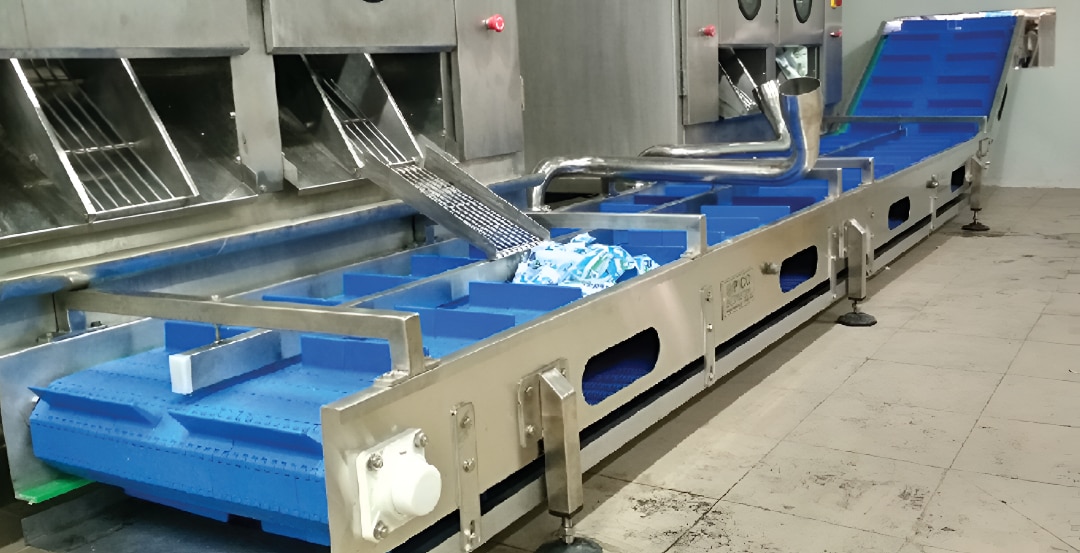
The belt is driven and supported by a series of plastic or metal sprockets (toothed gears) that lock into the underside of the plastic segments. Because the gears positively engage with the belt, there is zero chance of the belt slipping, tracking off-center, or needing manual tension adjustments. Key Features & Advantages Highly Repairable: If a section of the belt gets damaged, you don't need to replace the entire expensive belt. You simply pop out the hinge pins, replace the few broken plastic modules, and re-insert the pins. This reduces maintenance downtime from hours to minutes. Positive Drive (No Slipping): Because it is driven by sprockets rather than friction rollers, it can handle heavy loads, sudden starts and stops, and high-speed sorting without slipping. Complex Layouts (Side-Flexing): Modular belts can be engineered to go straight, ascend, descend, and bend around tight curves all on a single continuous belt driven by a single motor. This eliminates product transfer points where items might tip over. Material Variety: The plastic modules can be molded from different materials depending on the application: Polypropylene (PP): Great for general use and chemical resistance. Polyethylene (PE): Excellent for low-temperature environments (like food freezers). Acetal: High strength and low friction, perfect for heavy loads or high-wear areas. Common ApplicationsModular belt conveyors are incredibly popular in industries with strict hygiene requirements or complex layout paths:Food Processing & Bakery: Transporting raw dough through proofing rooms, cooling freshly baked bread, or moving meat products through high-pressure washdown zones (the plastic material resists bacteria and is easy to sanitize).Beverage & Canning: Mass-handling rows of aluminum cans or glass bottles around sharp 90-degree turns without them tipping over or scratching.Automotive & Heavy Assembly: Moving heavy car components or logistics totes through manufacturing cells where oils and fluids might degrade a standard rubber belt.E-commerce & Packaging: Sorting, accelerating, and merging cardboard boxes through complex distribution pathways.

6814772a5d263414004dd4a4 Card 2

product image
Belt Conveyors

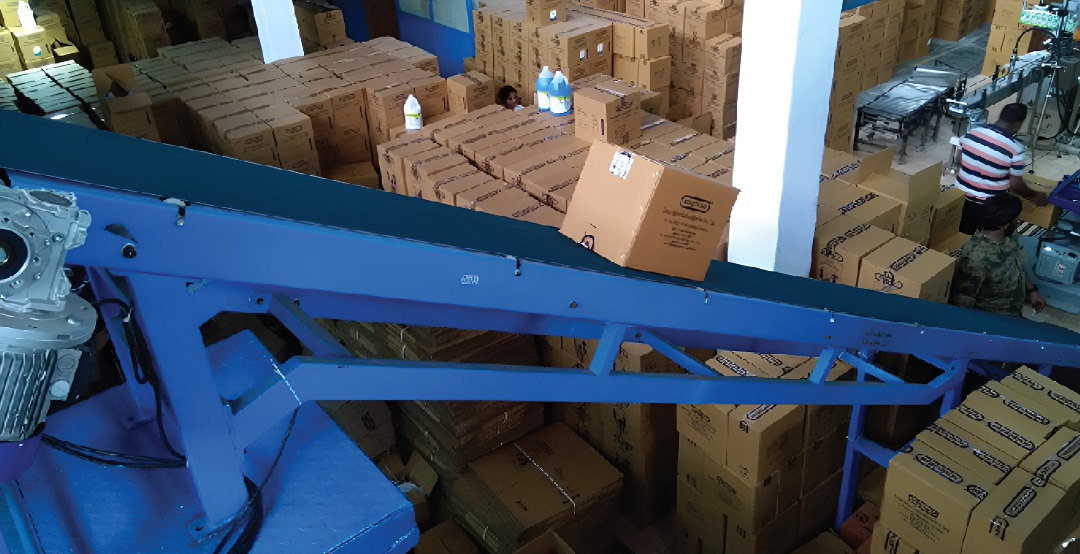
It operates similarly to a standard flat belt conveyor—using a continuous loop of fabric, rubber, or plastic belt stretched over a motorized dynamic bed. However, to handle the elevation changes smoothly, it incorporates specialized modifications: High-Friction Belting (Rough Top): The surface of the belt is given a textured, “rough top” pattern made of rubber or PVC to grip the bottom of packages. Cleated Belts: For steeper angles, raised vertical barriers or “cleats” (T-shaped or L-shaped ribs) are integrated directly onto the belt surface. These act as mini-shelves that physically catch and carry the product upward. Corrugated Sidewalls: Often paired with cleats, these flexible walls run along the edges of the belt to keep loose materials (like grain or plastic pellets) from spilling off the sides. Key Features & Advantages Smooth Elevation Transitions: Provides a continuous, uninterrupted flow of goods between multi-tiered mezzanines, floors, or overhead lines. Versatile Material Handling: Can handle everything from large, bulky cardboard boxes to loose bulk materials like gravel, powders, or recycling scraps. Controlled Braking: Equipped with motorized brake systems or backstops that automatically lock the belt in place if power is lost, preventing a heavy line of packages from cascading backward. Common Applications Inclined belt conveyors are essential workhorses in facilities with vertical layouts: Distribution Centers & E-commerce: Transporting incoming packages up from floor-level receiving docks onto overhead sorting lines or multi-level picking mezzanines. Food Processing & Agriculture: Elevating raw items (like vegetables, grains, or coffee beans) up into processing hoppers, blenders, or packaging machines. Recycling & Waste Management: Moving bulk crushed glass, plastics, or shredded paper out of sorting pits up into massive storage bins or compactors. Baggage Claim: Transporting luggage up from underground airport sorting tunnels to the public terminal carousels.

Phone Number

08048068921

Please keep 0 before dialling the number.

Email Address sales@picoautomation.in

Mon-Thu: 10 AM - 2 PM • Fri: 3 PM - 7AM

Address No:20, Prime Estates, Sf No:34, 1 & 35/1, Athipalayam Rd, Periyanaickenpalayam, Coimbatore, Tamil Nadu 641020

Coimbatore, India, 641020