Cleat Belt Conveyors
Description
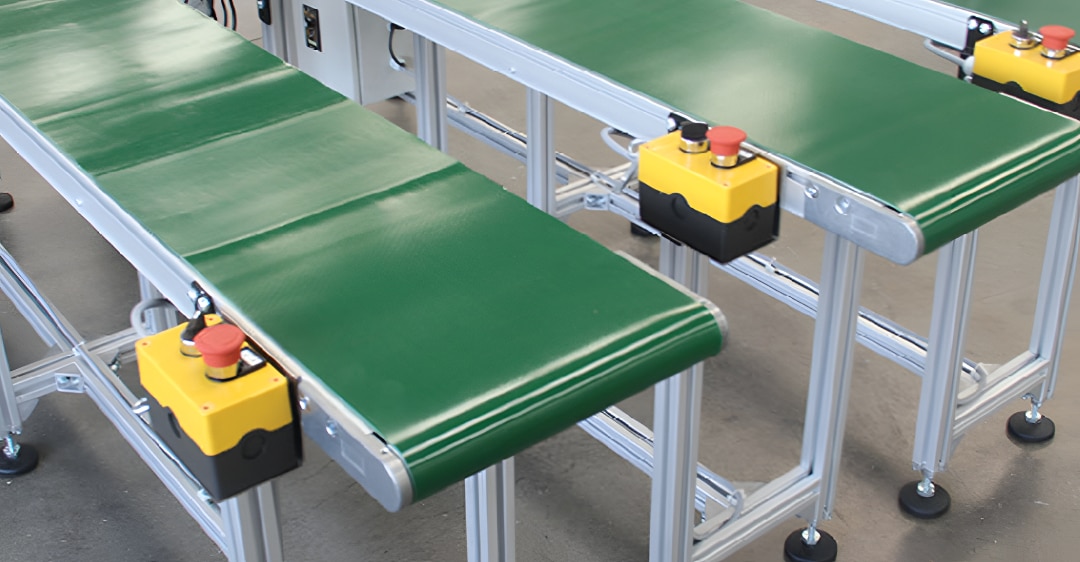
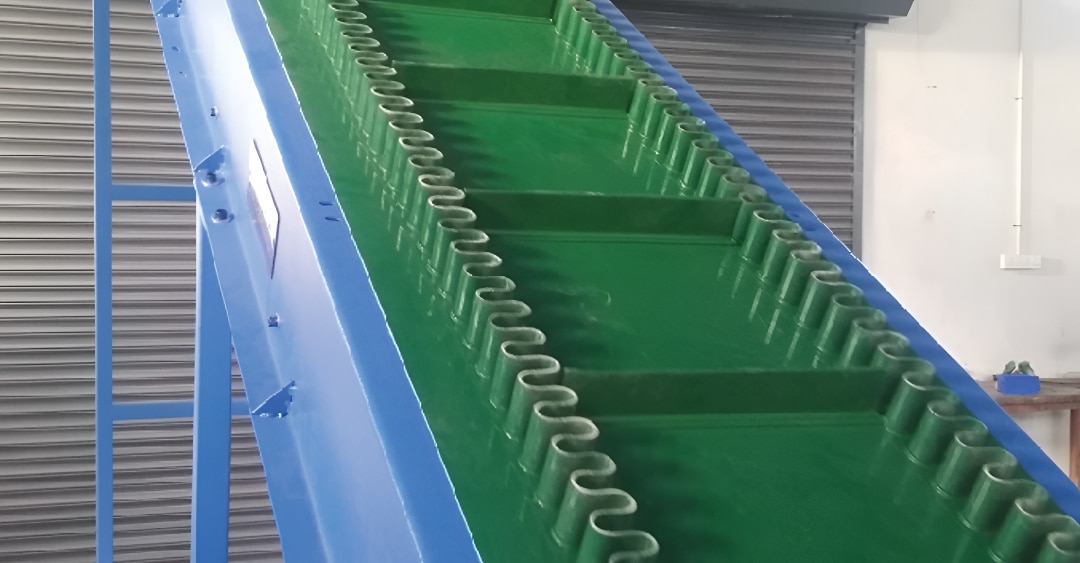
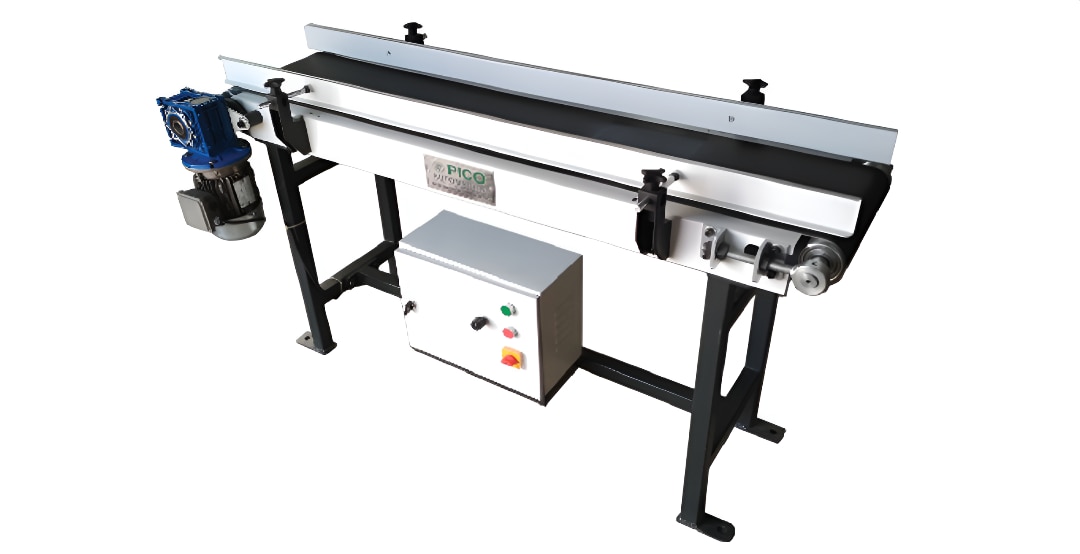
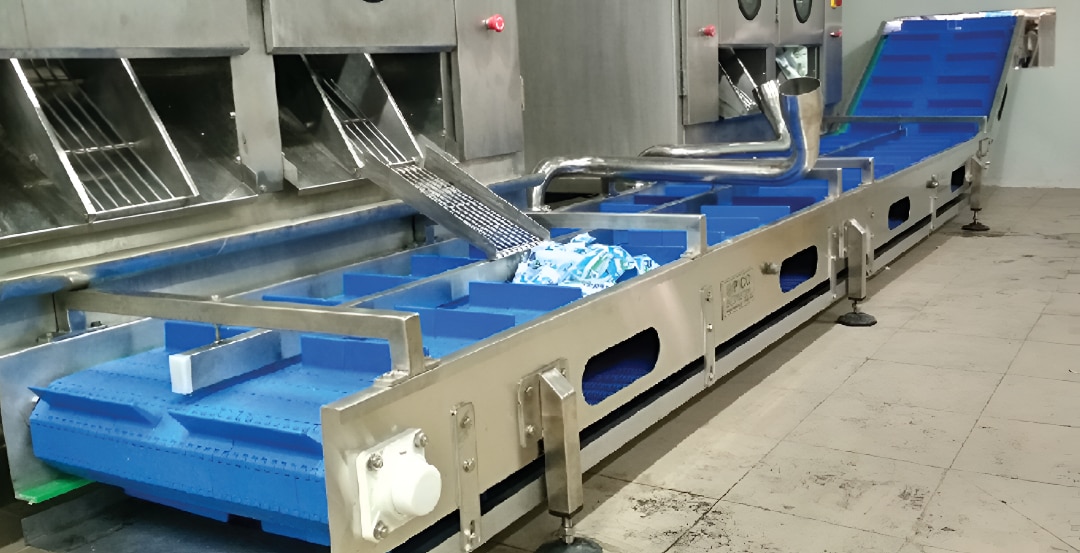
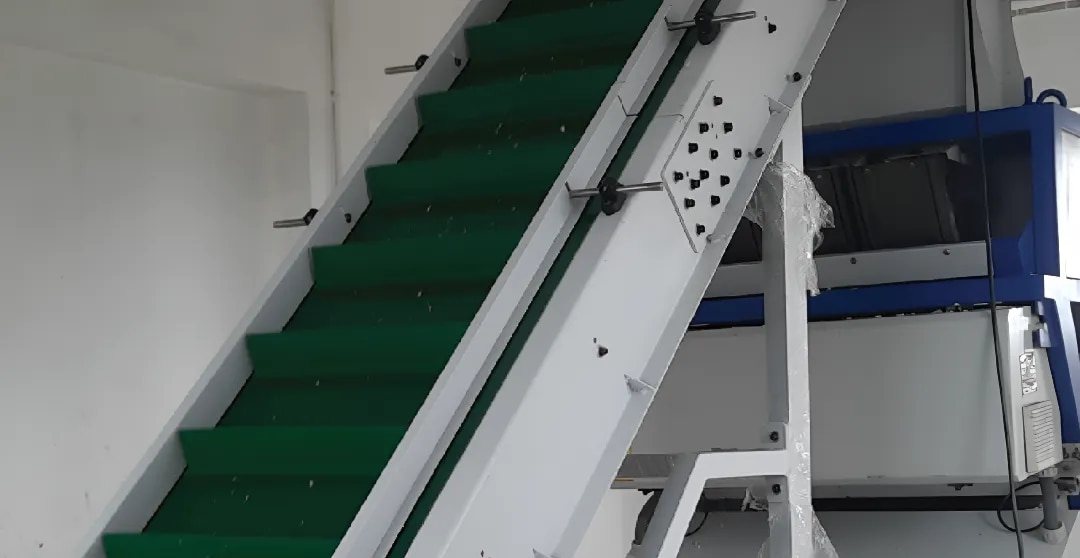
The core mechanism is similar to a standard flat belt conveyor, but the belt surface is structurally modified. As the motorized belt moves, the cleats create physical compartments.
On an incline: The product rests against the front face of the cleat, preventing gravity from pulling it downward.
On a decline: The cleats act as brakes, gently regulating the speed of the product as it moves down a slope.
Key Features & Advantages
High-Incline Transport: Standard flat belts max out at around a 15 -degree to 20 -degree
angle before items slip. Cleated belts can comfortably handle angles from 20 -degree up to 45 -degree (and even steeper when paired with specialized side walls).
Space Efficiency: Because it can lift items at steeper angles, it requires significantly less horizontal floor space to bridge vertical heights compared to a standard gradual incline conveyor.
Precise Product Spacing (Indexing): Cleats create uniform pockets. This allows the conveyor to feed items into packaging or sorting machines one at a time at a perfectly timed cadence.
Common Applications
Cleat belt conveyors are widely utilized across industries that deal with bulk items, loose parts, or multi-level building layouts:
Food Processing & Agriculture: Elevating raw fruits, vegetables, nuts, or grains up into washing hoppers, blenders, or sorting stations.
Manufacturing & Stamping: Carrying small metal parts, plastic molded components, or hardware screws out of a drop chute up into large storage bins.
Packaging Lines: Transporting loose pouches, candy bars, or small cosmetics up to a top-level sealing or cartoning machine.
Recycling & Waste Management: Moving shredded plastics, crushed aluminum cans, or glass shards out of floor-level sorting pits into processing machinery.