Coimbatore
08048068921

factory automation

6814772a5d263414004dd4a4 Card 2

product image
Factory Automation

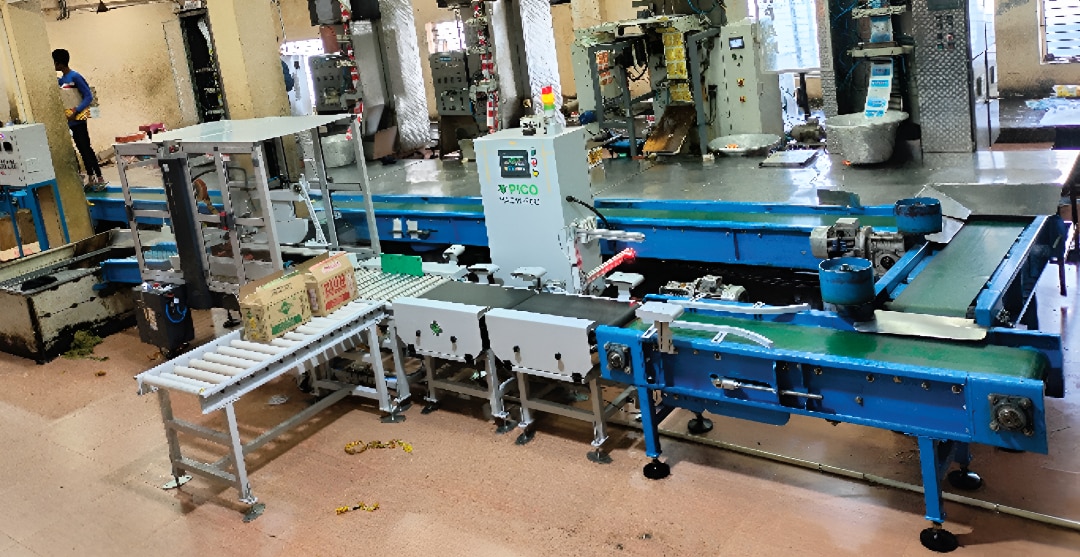
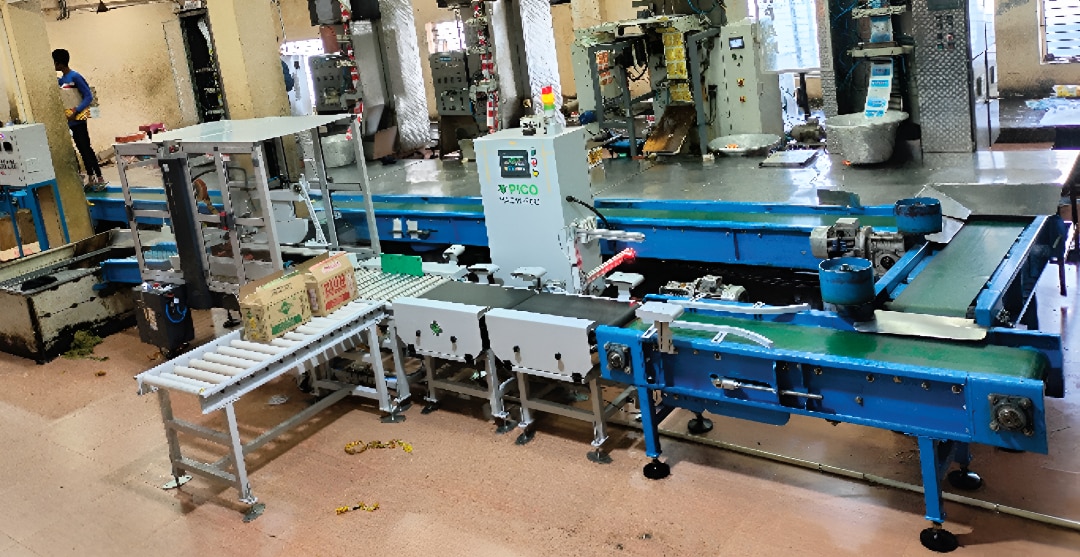
A standard checkweigher line is not just one conveyor; it is a highly synchronized system consisting of three distinct, consecutive conveyor zones: 1. The Infeed Conveyor (Spacing/Metering) Products arriving from the packaging or filling machines are often randomly spaced or clumped together. The Function: The infeed conveyor uses speed changes to pull the products apart, creating a strict, uniform physical gap between each item. This ensures that only one product sits on the scale at any given millisecond. 2. The Weigh Conveyor (The Scale) This is the heart of the system. It features an ultra-lightweight, perfectly balanced belt riding on top of a highly sensitive electronic load cell (often using Electromagnetic Force Restoration, or EMFR, technology). The Function: As the product glides across this specific belt, the load cell measures the downward force. The internal computer filters out the mechanical vibrations of the factory and calculates the exact weight of the moving object in a fraction of a second. 3. The Outfeed & Reject Conveyor (The Traffic Cop) Once weighed, the product immediately transitions to the outfeed belt. The Function: If the weight matches the acceptable parameters, the item continues safely down the main line toward palletizing. If the weight is incorrect, the computer triggers an integrated automated reject mechanism to discard the item. Common Automated Reject Mechanisms Depending on the product’s size, weight, and fragility, different mechanisms are used on the outfeed line: Pneumatic Pusher: A high-speed air piston punches out from the side, instantly sliding off-weight boxes or heavy cans into a reject bin. Air Blast (Air Jet): For lightweight items like bagged snacks or pharmaceutical blister packs, a powerful puff of compressed air blows the defective item off the line without any physical mechanical contact. Drop Flap / Diverter Arm: The conveyor bed physically drops open momentarily to let a underfilled packet fall through, or a mechanical gate swings out to gently steer fragile items (like glass jars) onto a parallel correction lane. Key Advantages 1. Brand & Regulatory Compliance Selling underfilled products can lead to severe legal penalties and ruin a brand's reputation. Conversely, overfilling products (“product giveaway”) bleeds money over time. Checkweighers ensure every package perfectly hits the weight printed on the label. 2. Instant Quality Control (Missing Component Detection) Weight is an excellent proxy for completeness. A checkweigher can instantly detect if a sealed electronics box is missing its manual, if a kit is missing a screw, or if a cosmetic box is missing its bottle. 3. Real-Time Feedback Loop Modern smart checkweighers communicate directly with the upstream filling machines. If the checkweigher notices that the last 50 boxes have been drifting slightly heavy, it automatically sends a signal to the filling nozzles to trim back the volume, optimizing material costs on the fly. Common Applications Food & Beverage: Verifying the net weight of cereal boxes, ready-made meals, canned sodas, and bagged produce. Pharmaceuticals: Ensuring that a box of cough medicine contains the exact number of pill sheets and the liquid bottles are filled to the precise milliliter. E-Commerce & Logistics: Weighing packed shipping boxes right before they go onto the delivery truck to verify that the contents perfectly match the digital order invoice.

6814772a5d263414004dd4a4 Card 2

product image
Factory Automation

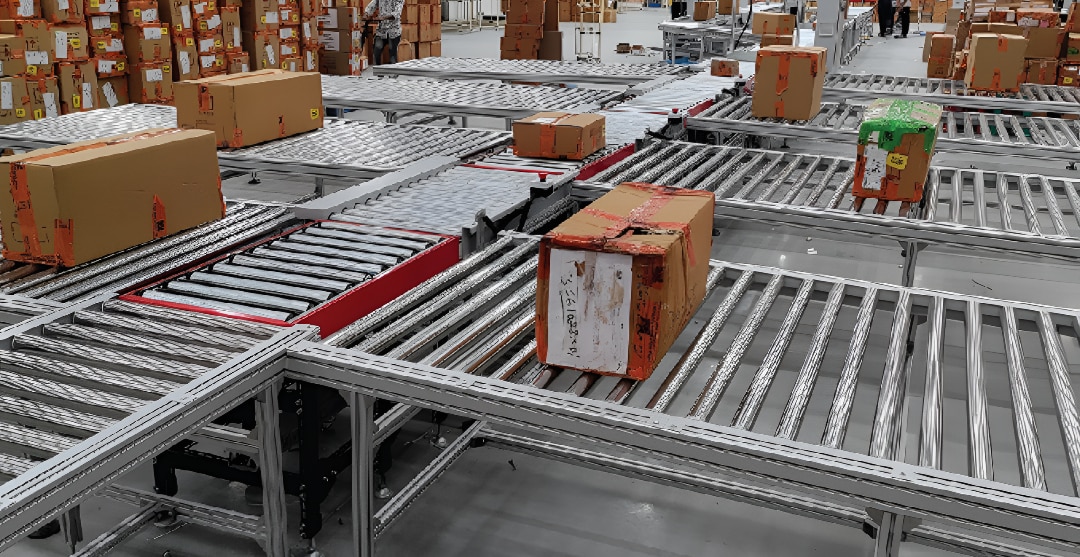
The end of a packaging line must dynamically manage the output of high-speed packaging machinery without causing a pile-up. A standard workflow operates in three distinct phases: Receiving and Pacing (Metering): Randomly spaced boxes exiting a case sealer are pulled onto a high-grip belt or small roller conveyor. The system uses specific variable speeds to create exact physical gaps between the boxes. Identification and Sortation: As the spaced boxes pass down the line, automated scanners read barcodes or RFID tags. High-speed divert modules (such as pop-up wheels, pusher arms, or shoe sorters) instantly slide individual boxes onto dedicated branch lines based on their destination or product SKU. Buffering (Accumulation): The sorted boxes gather on low-back-pressure or zero-pressure accumulation conveyors immediately upstream from a robotic palletizer or human packing station, waiting to be stacked. Key Types of Conveyors Used in EOL Systems Because of the heavy, varying, and often bulky nature of packed cases, EOL layouts rely on specific conveyor types: 1. Zero Pressure Accumulation (ZPA) Roller Conveyors The absolute backbone of EOL lines. They are divided into small electronic zones controlled by photo-eye sensors. The Function: When a downstream machine (like a palletizer) pauses to swap a pallet, the boxes behind it stop automatically in their assigned zones without touching or pressing against each other. This prevents crushed boxes and product damage. 2. Pop-Up Wheel and Roller Sorters Integrated directly into the main line frame, these small motorized wheels sit just below the surface.The Function: When a box needing redirection passes over, the wheels instantly pop up, tilt at a 30-Degree or 40-Degree, and spin—seamlessly shifting the box onto a shipping lane at high speeds without pausing the main line.3. Modular Plastic Belt Conveyors Built from interlocking plastic segments, these wide belts are ideal for transferring heavy bundles, multi-packs of beverages, or large, awkwardly shaped shrink-wrapped trays that might stall on standard rollers. Critical Functional ZonesAn EOL layout is rarely a single continuous track; it is built out of distinct operational modules:Incline/Decline Matting: Used to bring packages down from overhead ceiling spaces where primary packaging occurred, or up to the standard ergonomic height required for manual scanning and palletizing. 90-Degree Transfers: Utilizing a nested chain-and-roller system to change a heavy box’s direction by $90^circ$ without physically spinning or rotating the orientation of the carton itself.Reject Lanes: A short, dedicated off-shoot track. If a checkweigher detects an underfilled box or a camera spots a missing barcode, a pneumatic piston instantly shunts that specific box onto the reject lane for manual inspection, ensuring the main line never stops. Major Advantages of Optimized EOL Conveyors 1. Seamless Multi-Line Merging In large facilities, multiple independent packaging machines (e.g., three different lines wrapping chips) all feed into a single EOL conveyor network. Smart merging logic ensures boxes slide into the main stream seamlessly like cars merging onto a highway, preventing collisions. 2. Continuous Upstream Operations By acting as a massive physical “buffer,” an EOL conveyor line can store 10 to 20 minutes worth of finished boxes. If a shipping truck is delayed or a palletizer encounters an error, the upstream manufacturing and sealing machines can keep running at full capacity. 3. Reduced Manual Forklift Operations Instead of workers manually stacking boxes on floor pallets at 15 different spots in the warehouse and driving them around, EOL conveyors centralize all finished goods down to a singular, secure robotic palletizing zone.

6814772a5d263414004dd4a4 Card 2

product image
Factory Automation

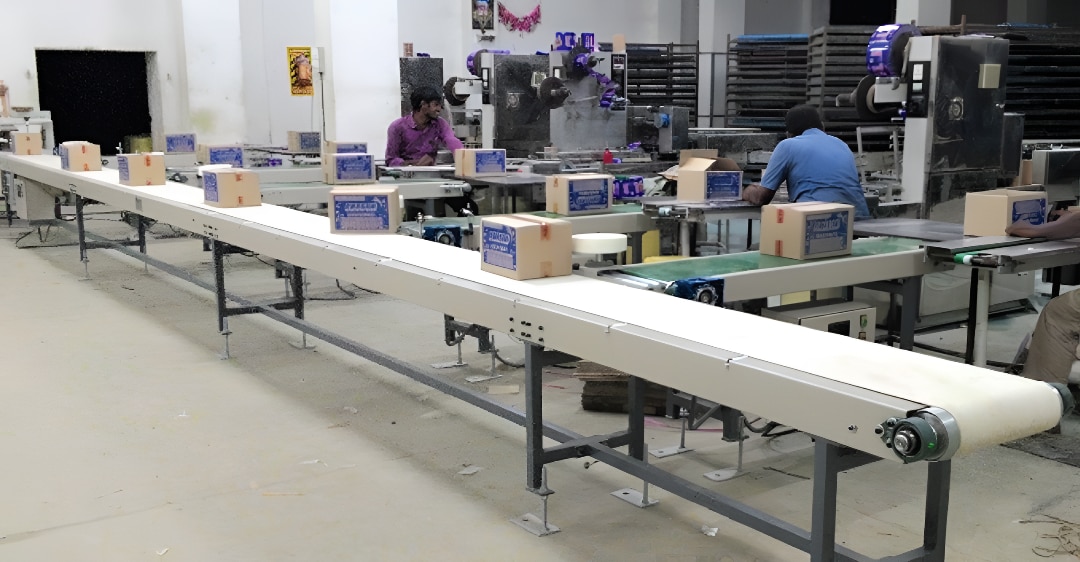
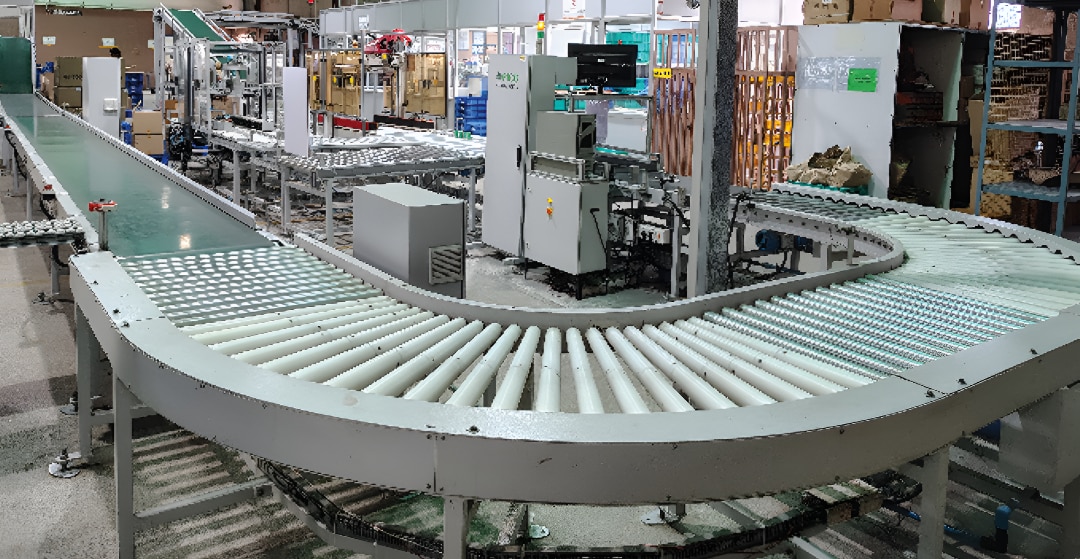
Most industrial systems utilize one or a combination of these four foundational flow patterns: 1. Straight Line Layout (I-Shape) The simplest and most direct configuration. Products enter at one end, move through sequential workstations or processes, and exit at the opposite end. Best For: Simple assembly lines, inline inspection, washdowns, and high-speed packaging. Pros: Highly economical, straightforward to install, and easily scalable. Cons: Requires a long, uninterrupted footprint and lacks buffering flexibility. 2. U-Shaped Layout The conveyor forms a loop, bringing the end of the production line right back near the beginning. Best For: Lean manufacturing cells, order picking, and environments where space is premium. Pros: Incredible space efficiency. It allows a single operator to manage both the loading (input) and unloading (output) stations, drastically reducing labor movement. Cons: Can create physical bottlenecks if the center of the “U” becomes too crowded with parts bins or tooling. 3. L-Shaped Layout The line runs straight and then makes a sharp 90° turn, usually to navigate around building pillars, walls, or existing machinery. Best For: Transitioning products from a primary manufacturing line over to a secondary packaging or shipping area. Pros: Excellent for bypassing architectural obstacles and utilizing tight corner spaces. Cons: Requires specialized turn modules (like tapered roller curves or 90-degree transfer units) which add mechanical complexity. 4. Closed Loop Layout (O-Shape / Carousel) A continuous, never-ending track where carriers or products circulate indefinitely until diverted. Best For: Powder coating lines, garment sorting, and track chain conveyors running overhead. Pros: Allows products to stay on the line for extended periods (e.g., cooling down or curing in an oven) without stopping the rest of the factory. Cons: Requires precise tracking software to know exactly where an item is along the continuous loop. Critical Functional Elements within a Layout A functional layout is rarely just a single track; it relies on smart intersecting zones to control traffic: Merges: Where two or more conveyor lanes feed into a single main line. This requires traffic-cop logic (photo-eye sensors or mechanical gates) to prevent boxes from colliding. Diverts / Sortation: High-speed paddles, pushers, or pop-up wheels that instantly redirect specific items onto different sub-lanes based on barcodes or weight. Accumulation Buffers: Dedicated straight zones designed to temporarily store products when a downstream machine pauses. This keeps the upstream factory running smoothly without a total system shutdown. Vertical Elevation Changes: Utilizing inclines, declines, or spiral continuous lifters to move goods up to mezzanines or down to floor level, reclaiming valuable overhead air space.

6814772a5d263414004dd4a4 Card 2

product image
Factory Automation

Most industrial systems utilize one or a combination of these four foundational flow patterns: 1. Straight Line Layout (I-Shape) The simplest and most direct configuration. Products enter at one end, move through sequential workstations or processes, and exit at the opposite end. Best For: Simple assembly lines, inline inspection, washdowns, and high-speed packaging. Pros: Highly economical, straightforward to install, and easily scalable. Cons: Requires a long, uninterrupted footprint and lacks buffering flexibility. 2. U-Shaped Layout The conveyor forms a loop, bringing the end of the production line right back near the beginning. Best For: Lean manufacturing cells, order picking, and environments where space is premium. Pros: Incredible space efficiency. It allows a single operator to manage both the loading (input) and unloading (output) stations, drastically reducing labor movement. Cons: Can create physical bottlenecks if the center of the “U” becomes too crowded with parts bins or tooling. 3. L-Shaped Layout The line runs straight and then makes a sharp $90^circ$ turn, usually to navigate around building pillars, walls, or existing machinery.Best For: Transitioning products from a primary manufacturing line over to a secondary packaging or shipping area.Pros: Excellent for bypassing architectural obstacles and utilizing tight corner spaces.Cons: Requires specialized turn modules (like tapered roller curves or 90-degree transfer units) which add mechanical complexity. 4. Closed Loop Layout (O-Shape / Carousel) A continuous, never-ending track where carriers or products circulate indefinitely until diverted. Best For: Powder coating lines, garment sorting, and Track Chain Conveyors running overhead. Pros: Allows products to stay on the line for extended periods (e.g., cooling down or curing in an oven) without stopping the rest of the factory. Cons: Requires precise tracking software to know exactly where an item is along the continuous loop. Critical Functional Elements within a Layout A functional layout is rarely just a single track; it relies on smart intersecting zones to control traffic: Merges: Where two or more conveyor lanes feed into a single main line. This requires traffic-cop logic (photo-eye sensors or mechanical gates) to prevent boxes from colliding. Diverts / Sortation: High-speed paddles, pushers, or pop-up wheels that instantly redirect specific items onto different sub-lanes based on barcodes or weight. Accumulation Buffers: Dedicated straight zones designed to temporarily store products when a downstream machine pauses. This keeps the upstream factory running smoothly without a total system shutdown. Vertical Elevation Changes: Utilizing inclines, declines, or spiral continuous lifters to move goods up to mezzanines or down to floor level, reclaiming valuable overhead air space.

6814772a5d263414004dd4a4 Card 2

product image
Factory Automation

A successful factory automation project follows a rigorous engineering lifecycle: 1. Assessment & Feasibility (The Scope) Engineers analyze the existing manual process to identify bottlenecks, safety hazards, or high-waste areas. The team calculates the ROI (Return on Investment) and determines what level of automation is appropriate (e.g., introducing a single robotic arm vs. overhauling an entire assembly line). 2. System Design & Simulation Before buying any hardware, controls engineers design the system's architecture. They create electrical schematics, fluid power diagrams, and utilize Digital Twin technology—3D computer simulations that mimic the factory floor to test how machines, conveyors, and robots will interact without risking physical damage. 3. Procurement & Fabrication Once designs are approved, components are ordered or custom-built. Control Panels: Engineers build the physical electrical enclosures housing the processors, circuit breakers, and power supplies. Mechanical Tooling: Custom end-of-arm tools (grippers, welding torches, suction cups) are fabricated for the robots. 4. Integration & Programming This is where the machine comes to life. Programmers write the code that instructs the machines how to behave. They configure the centralized controllers to talk to sensors, motors, safety light curtains, and database systems seamlessly. 5. Commissioning & Testing The system is assembled on the actual factory floor. Engineers run FAT (Factory Acceptance Testing) and SAT (Site Acceptance Testing). They slowly ramp up production speeds, iron out software bugs, train operators, and hand over the live system to the manufacturing team. The Automation Pyramid (The Technology Stack) Every automation project implements a multi-layered technology stack, often visualized as a pyramid. A project ensures that data flows smoothly up and down these layers: Level 0: Field Level (The Muscles): The physical hardware doing the work—actuators, electric motors, pneumatic cylinders, and proximity sensors. Level 1: Control Level (The Brains): PLCs (Programmable Logic Controllers) that read sensor data and instantly tell the motors when to start or stop. Level 2: Supervisory Level (The Eyes): HMI (Human-Machine Interface) touchscreens and SCADA systems that allow plant operators to monitor the entire line, track metrics, and spot alarms visually. Level 3: Operational Level (The Managers): MES (Manufacturing Execution Systems) software that tracks raw materials as they turn into finished goods and schedules machine tasks. Level 4: Enterprise Level (The Business): ERP (Enterprise Resource Planning) systems that handle high-level corporate data, logistics, and sales tracking.

6814772a5d263414004dd4a4 Card 2

product image
Factory Automation

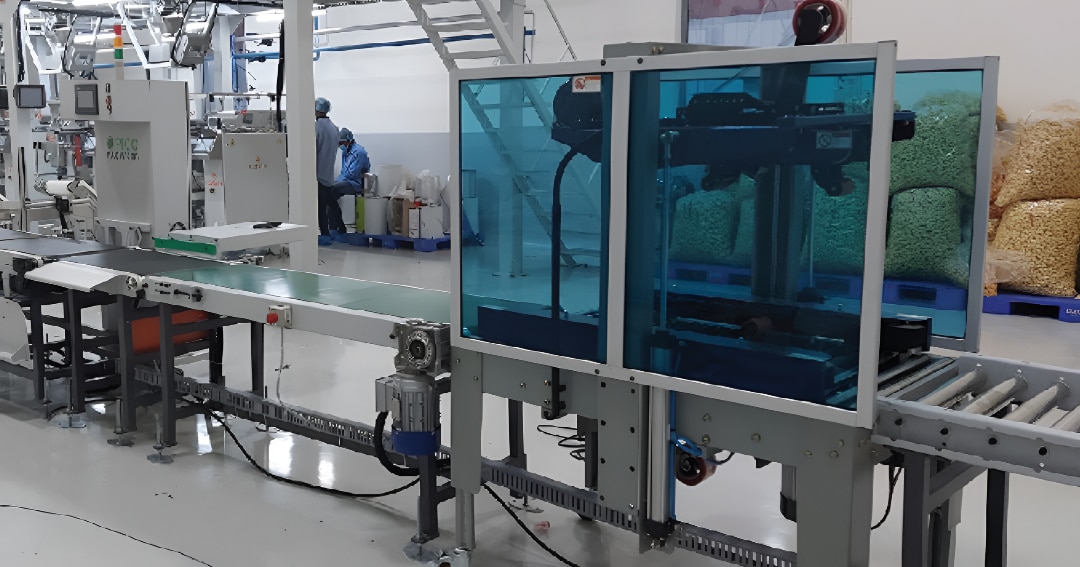
A fully automated packaging line is modular, meaning a product passes through several dedicated automated zones. These stages are generally divided into three categories: 1. Primary Packaging (Direct Product Contact) This is the initial layer of packaging that directly touches the product. Form-Fill-Seal (FFS) Machines: These machines take a roll of flat plastic film, shape it into a pouch or bag, fill it with a precise weight of product (like potato chips or liquid detergent), and heat-seal it closed. Capping and Bottling Lines: Automations that feed empty bottles, fill them with exact liquid volumes using flow-meter sensors, and mechanically torque caps onto them at high speeds. 2. Secondary Packaging (Grouping Products) Once the individual product is securely wrapped, secondary automation groups multiple items together for retail display or protection. Case Erectors: Robotic arms pull flat-packed cardboard boxes from a magazine, unfold them, square them up, and tape or glue the bottom flaps automatically. Pick-and-Place Robots: High-speed delta or articulated robotic arms use vacuum suction or mechanical grippers to lift products off a moving conveyor belt and neatly pack them into the erected cases. Case Sealers: Once the box is full, this machine folds down the top flaps and applies tape or hot-melt glue to secure the carton. 3. Tertiary Packaging (Bulk Transport Prep) This final stage prepares grouped products for bulk shipping and warehouse distribution. Automated Palletizers: Robotic arms or high-level mechanical stackers receive sealed boxes from the conveyor line and stack them onto a shipping pallet according to a mathematically optimized grid pattern. Pallet Stretch-Wrappers: The loaded pallet is moved onto a turntable or wrapped by a rotating mechanical arm that tightly binds the entire load in stretch film, ensuring it won't topple over during transit. Key Technologies Driving Modern Packaging Machine Vision Systems: High-speed cameras inspect packages in real-time. If a label is crooked, a barcode is unreadable, or a bottle is underfilled, the vision system flags it and a pneumatic pusher rejects it from the line without stopping production. Smart Sensors & IO-Link: Photo-eyes and proximity sensors track the flow of boxes, preventing jams and ensuring that a machine only fires (e.g., dispenses glue) when a box is perfectly positioned. Programmable Logic Controllers (PLCs): The centralized “brain” of the packaging line that coordinates speeds between the conveyor belts, filling machines, and robotic arms to maintain a synchronized workflow. Major Advantages of Packaging Automation 1. Unmatched Speed and Scalability While a skilled human worker might manually pack 5 to 10 boxes a minute, a modest automated case packer can easily process 30 to 60 cases per minute, running continuously 24/7 without fatigue. 2. Material Waste Reduction Human operators occasionally misapply tape, spill product during filling, or cut film incorrectly. Automated systems use precise servo motors to dispense the exact amount of product, tape, and film required down to the millimeter, significantly lowering material costs. 3. Elevated Hygiene and Safety In industries like pharmaceuticals and food processing, human contact introduces contamination risks. Automating the primary packaging stage ensures a sterile environment. Furthermore, it removes workers from repetitive motion tasks (like box folding) that frequently cause workplace strain injuries.

Phone Number

08048068921

Please keep 0 before dialling the number.

Email Address sales@picoautomation.in

Mon-Thu: 10 AM - 2 PM • Fri: 3 PM - 7AM

Address No:20, Prime Estates, Sf No:34, 1 & 35/1, Athipalayam Rd, Periyanaickenpalayam, Coimbatore, Tamil Nadu 641020

Coimbatore, India, 641020