End of Packaging Lines
Description
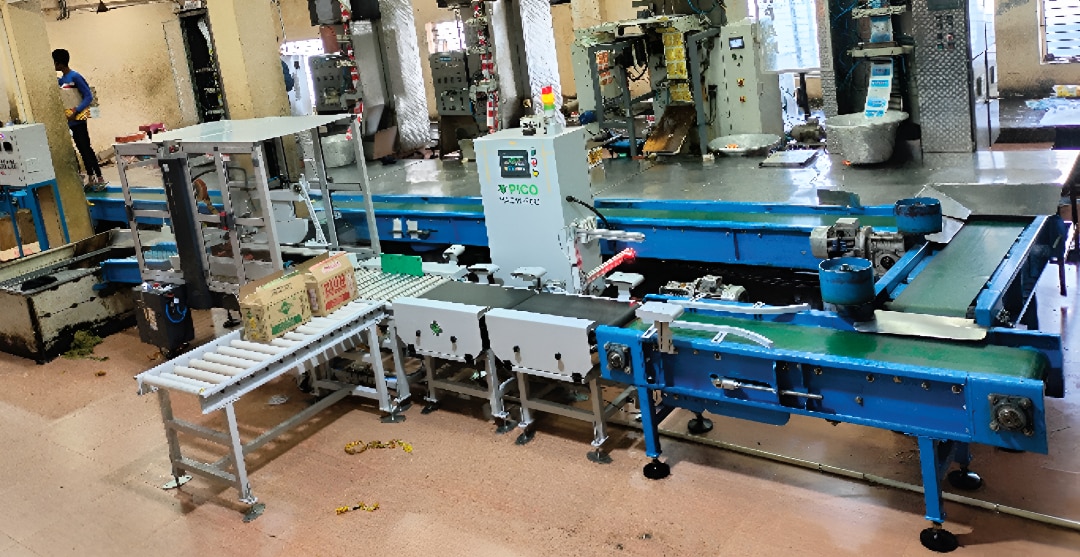
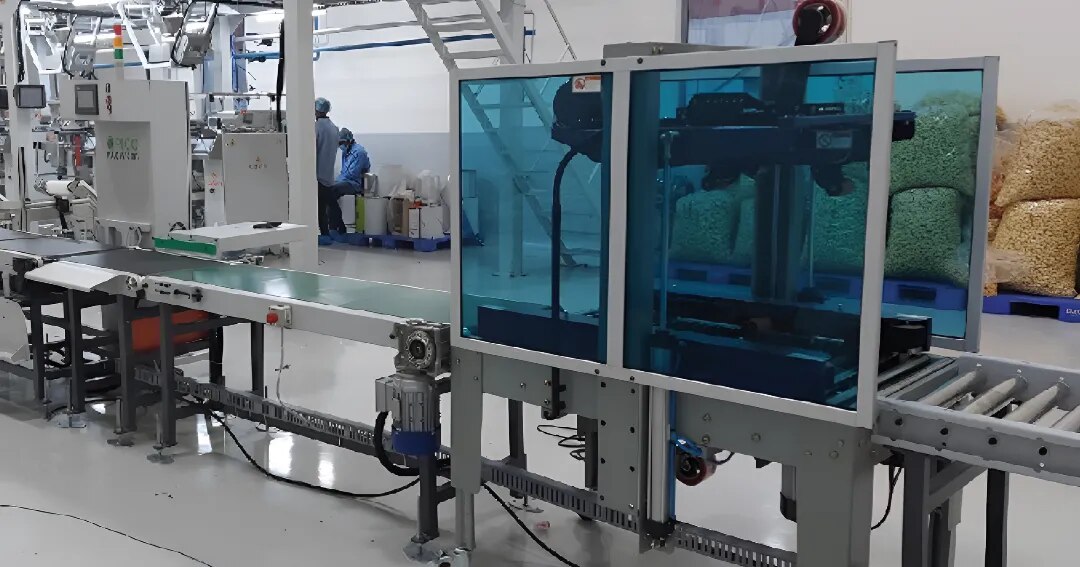
The end of a packaging line must dynamically manage the output of high-speed packaging machinery without causing a pile-up. A standard workflow operates in three distinct phases:
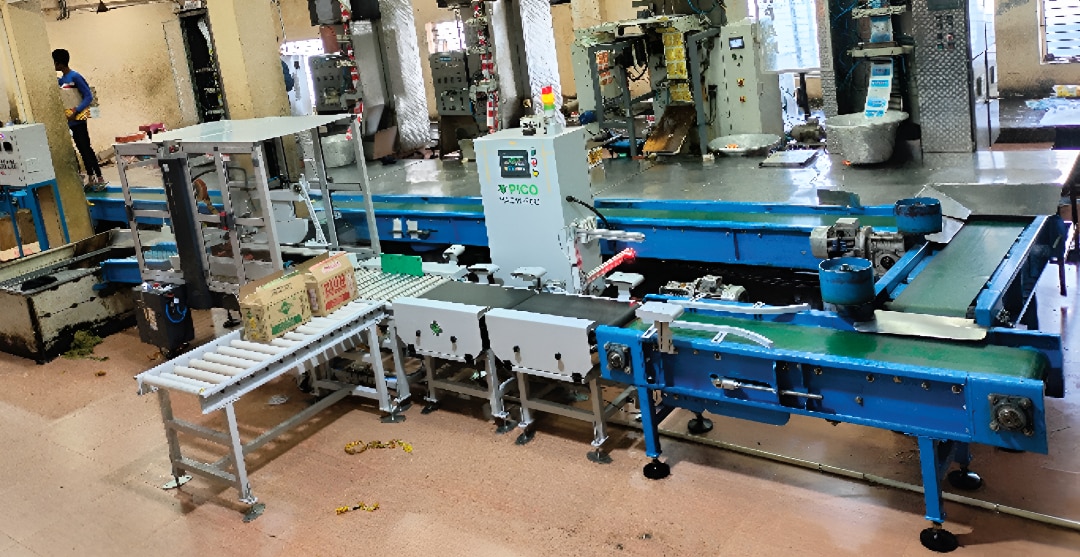
Receiving and Pacing (Metering): Randomly spaced boxes exiting a case sealer are pulled onto a high-grip belt or small roller conveyor. The system uses specific variable speeds to create exact physical gaps between the boxes.
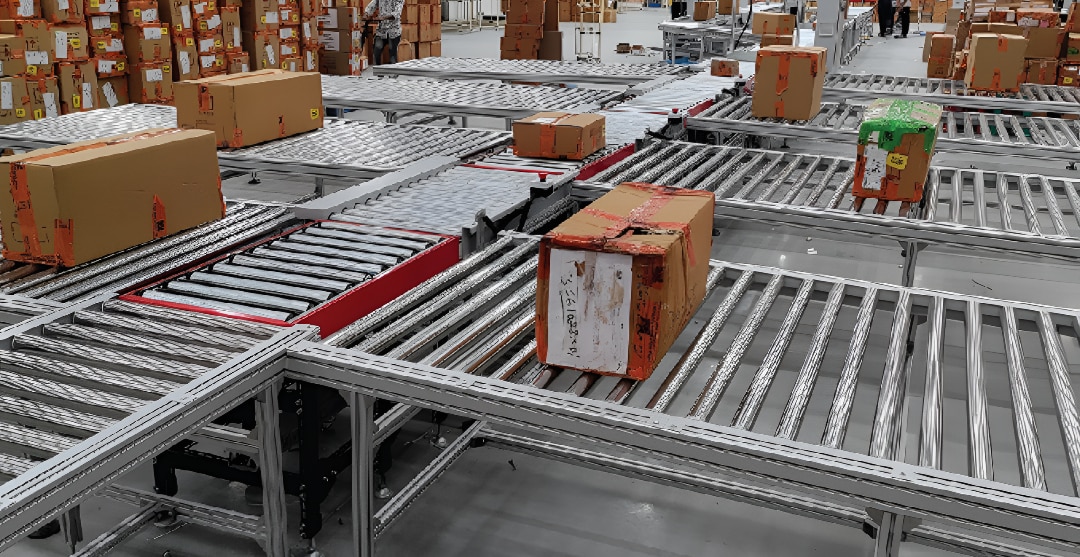
Identification and Sortation: As the spaced boxes pass down the line, automated scanners read barcodes or RFID tags. High-speed divert modules (such as pop-up wheels, pusher arms, or shoe sorters) instantly slide individual boxes onto dedicated branch lines based on their destination or product SKU.
Buffering (Accumulation): The sorted boxes gather on low-back-pressure or zero-pressure accumulation conveyors immediately upstream from a robotic palletizer or human packing station, waiting to be stacked.
Key Types of Conveyors Used in EOL Systems
Because of the heavy, varying, and often bulky nature of packed cases, EOL layouts rely on specific conveyor types:
1. Zero Pressure Accumulation (ZPA) Roller Conveyors
The absolute backbone of EOL lines. They are divided into small electronic zones controlled by photo-eye sensors.
The Function: When a downstream machine (like a palletizer) pauses to swap a pallet, the boxes behind it stop automatically in their assigned zones without touching or pressing against each other. This prevents crushed boxes and product damage.
2. Pop-Up Wheel and Roller Sorters Integrated directly into the main line frame, these small motorized wheels sit just below the surface.The Function: When a box needing redirection passes over, the wheels instantly pop up, tilt at a 30-Degree or 40-Degree, and spin—seamlessly shifting the box onto a shipping lane at high speeds without pausing the main line.3. Modular Plastic Belt Conveyors Built from interlocking plastic segments, these wide belts are ideal for transferring heavy bundles, multi-packs of beverages, or large, awkwardly shaped shrink-wrapped trays that might stall on standard rollers.
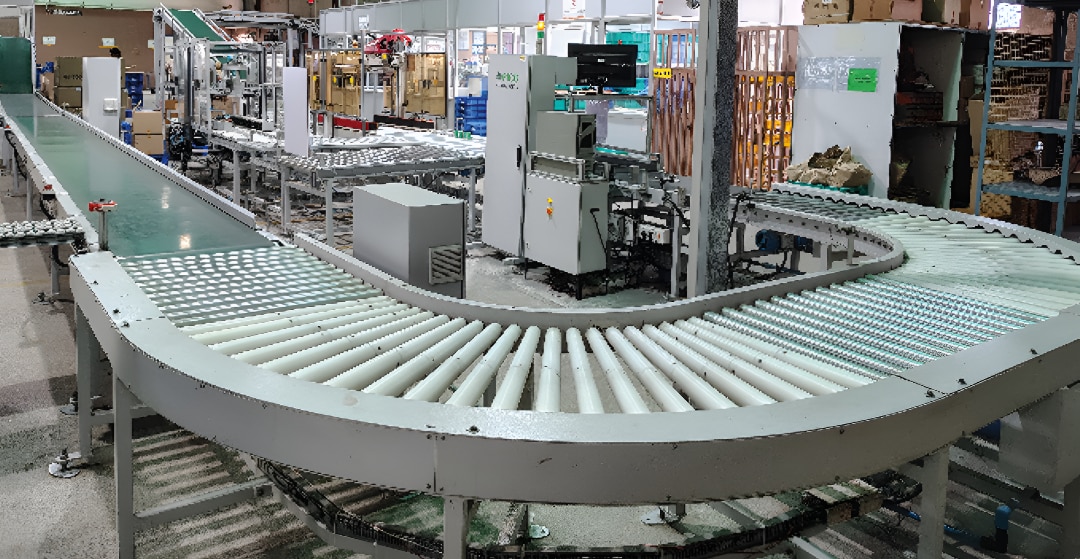
Critical Functional ZonesAn EOL layout is rarely a single continuous track; it is built out of distinct operational modules:Incline/Decline Matting: Used to bring packages down from overhead ceiling spaces where primary packaging occurred, or up to the standard ergonomic height required for manual scanning and palletizing. 90-Degree Transfers: Utilizing a nested chain-and-roller system to change a heavy box’s direction by $90^circ$ without physically spinning or rotating the orientation of the carton itself.Reject Lanes: A short, dedicated off-shoot track. If a checkweigher detects an underfilled box or a camera spots a missing barcode, a pneumatic piston instantly shunts that specific box onto the reject lane for manual inspection, ensuring the main line never stops.
Major Advantages of Optimized EOL Conveyors
1. Seamless Multi-Line Merging
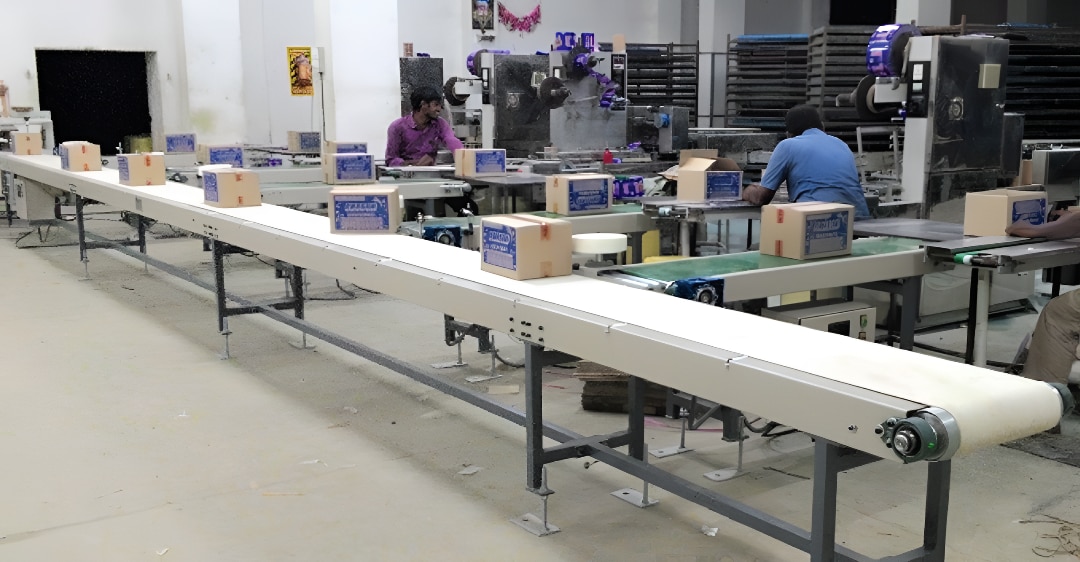
In large facilities, multiple independent packaging machines (e.g., three different lines wrapping chips) all feed into a single EOL conveyor network. Smart merging logic ensures boxes slide into the main stream seamlessly like cars merging onto a highway, preventing collisions.
2. Continuous Upstream Operations
By acting as a massive physical “buffer,” an EOL conveyor line can store 10 to 20 minutes worth of finished boxes. If a shipping truck is delayed or a palletizer encounters an error, the upstream manufacturing and sealing machines can keep running at full capacity.
3. Reduced Manual Forklift Operations
Instead of workers manually stacking boxes on floor pallets at 15 different spots in the warehouse and driving them around, EOL conveyors centralize all finished goods down to a singular, secure robotic palletizing zone.