Checkweigher Line
Description
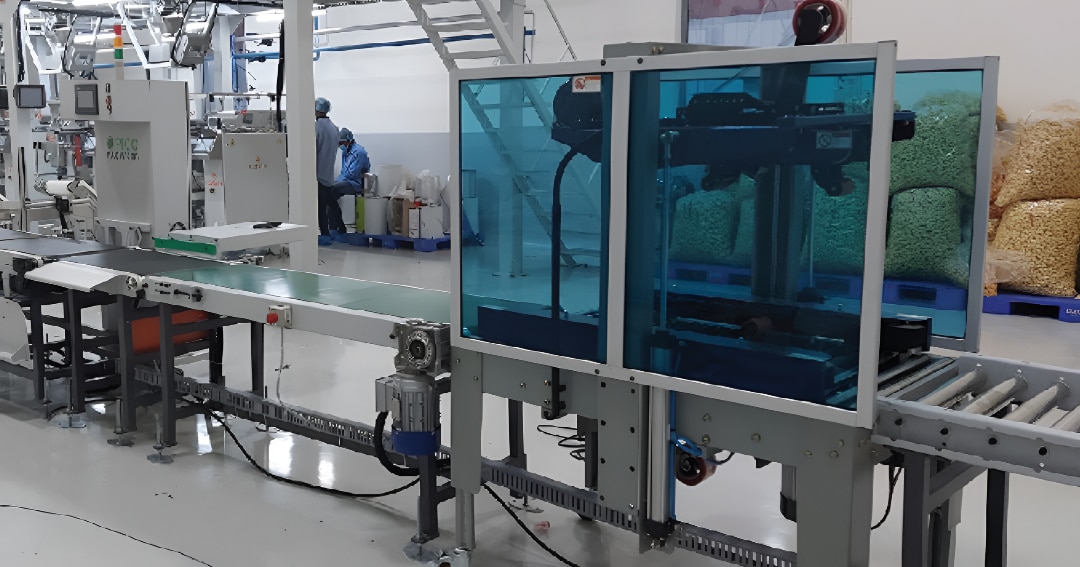
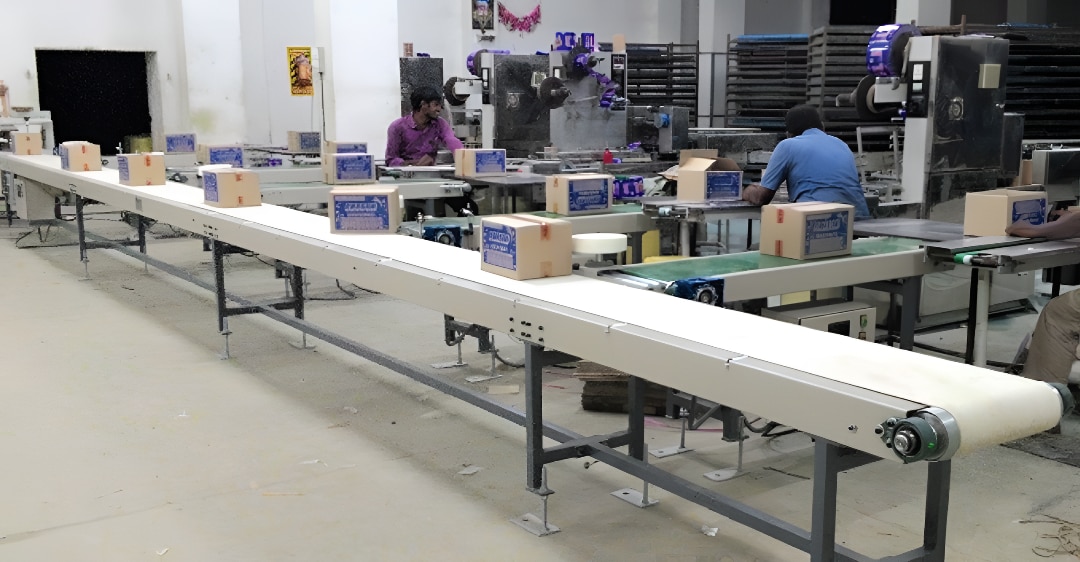
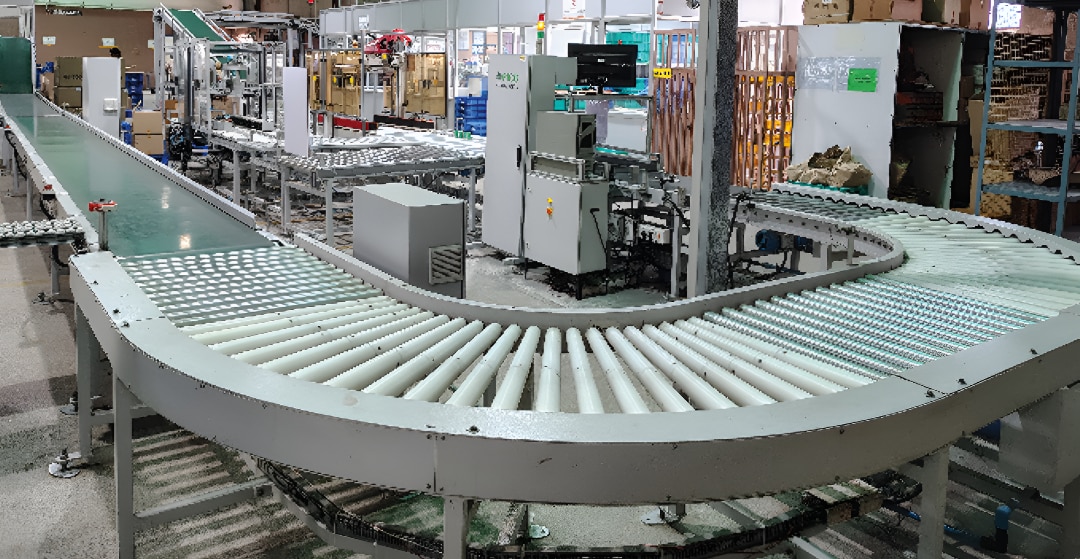
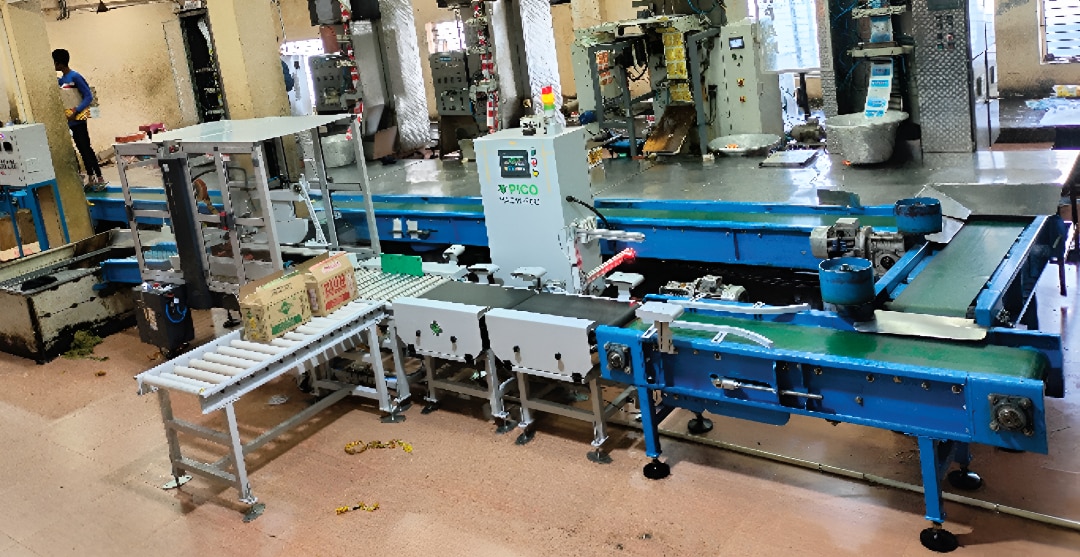
A standard checkweigher line is not just one conveyor; it is a highly synchronized system consisting of three distinct, consecutive conveyor zones:
1. The Infeed Conveyor (Spacing/Metering)
Products arriving from the packaging or filling machines are often randomly spaced or clumped together.
The Function: The infeed conveyor uses speed changes to pull the products apart, creating a strict, uniform physical gap between each item. This ensures that only one product sits on the scale at any given millisecond.
2. The Weigh Conveyor (The Scale)
This is the heart of the system. It features an ultra-lightweight, perfectly balanced belt riding on top of a highly sensitive electronic load cell (often using Electromagnetic Force Restoration, or EMFR, technology).
The Function: As the product glides across this specific belt, the load cell measures the downward force. The internal computer filters out the mechanical vibrations of the factory and calculates the exact weight of the moving object in a fraction of a second.
3. The Outfeed & Reject Conveyor (The Traffic Cop)
Once weighed, the product immediately transitions to the outfeed belt.
The Function: If the weight matches the acceptable parameters, the item continues safely down the main line toward palletizing. If the weight is incorrect, the computer triggers an integrated automated reject mechanism to discard the item.
Common Automated Reject Mechanisms
Depending on the product’s size, weight, and fragility, different mechanisms are used on the outfeed line:
Pneumatic Pusher: A high-speed air piston punches out from the side, instantly sliding off-weight boxes or heavy cans into a reject bin.
Air Blast (Air Jet): For lightweight items like bagged snacks or pharmaceutical blister packs, a powerful puff of compressed air blows the defective item off the line without any physical mechanical contact.
Drop Flap / Diverter Arm: The conveyor bed physically drops open momentarily to let a underfilled packet fall through, or a mechanical gate swings out to gently steer fragile items (like glass jars) onto a parallel correction lane.
Key Advantages
1. Brand & Regulatory Compliance
Selling underfilled products can lead to severe legal penalties and ruin a brand's reputation. Conversely, overfilling products (“product giveaway”) bleeds money over time. Checkweighers ensure every package perfectly hits the weight printed on the label.
2. Instant Quality Control (Missing Component Detection)
Weight is an excellent proxy for completeness. A checkweigher can instantly detect if a sealed electronics box is missing its manual, if a kit is missing a screw, or if a cosmetic box is missing its bottle.
3. Real-Time Feedback Loop
Modern smart checkweighers communicate directly with the upstream filling machines. If the checkweigher notices that the last 50 boxes have been drifting slightly heavy, it automatically sends a signal to the filling nozzles to trim back the volume, optimizing material costs on the fly.
Common Applications
Food & Beverage: Verifying the net weight of cereal boxes, ready-made meals, canned sodas, and bagged produce.
Pharmaceuticals: Ensuring that a box of cough medicine contains the exact number of pill sheets and the liquid bottles are filled to the precise milliliter.
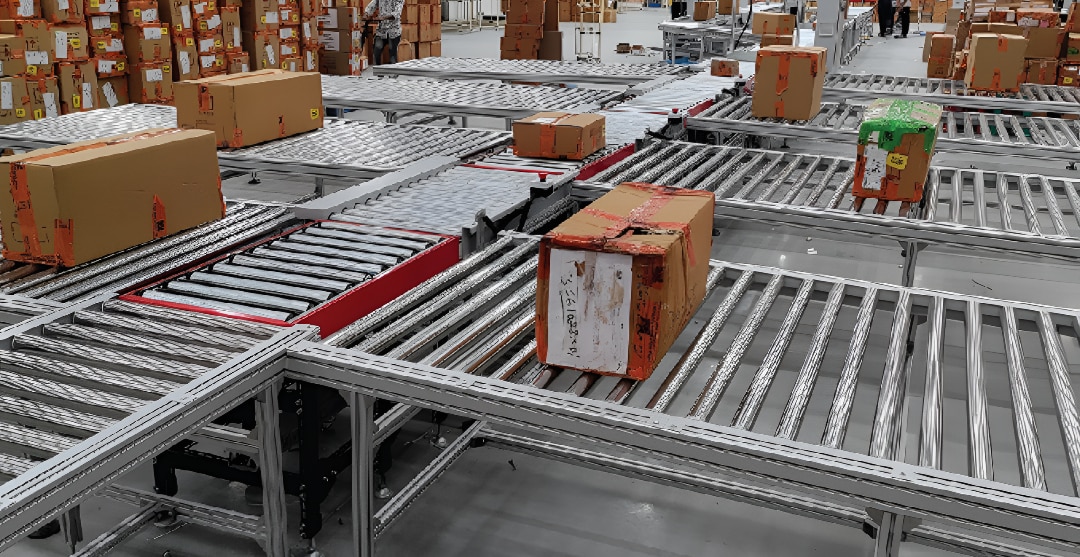
E-Commerce & Logistics: Weighing packed shipping boxes right before they go onto the delivery truck to verify that the contents perfectly match the digital order invoice.