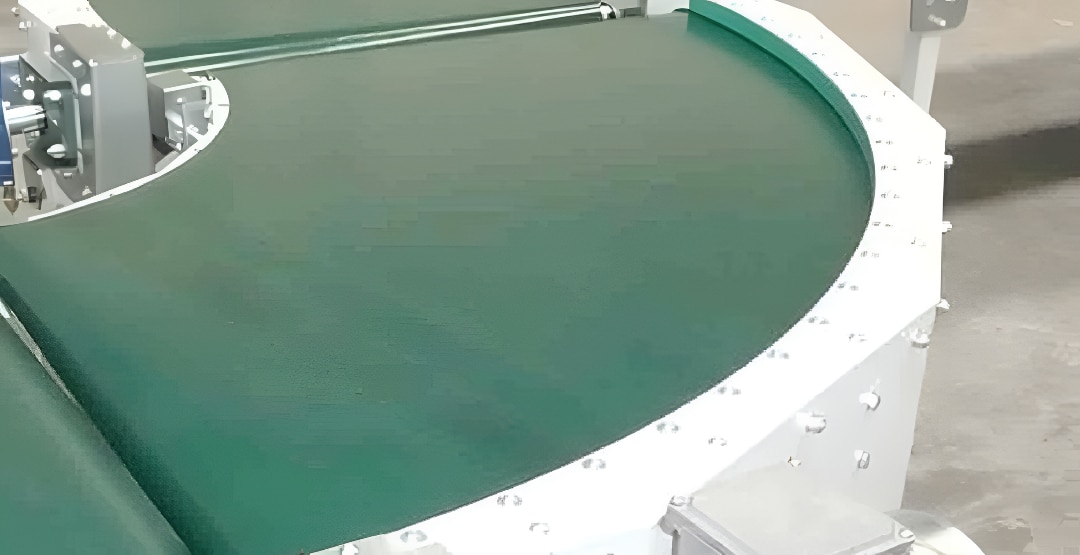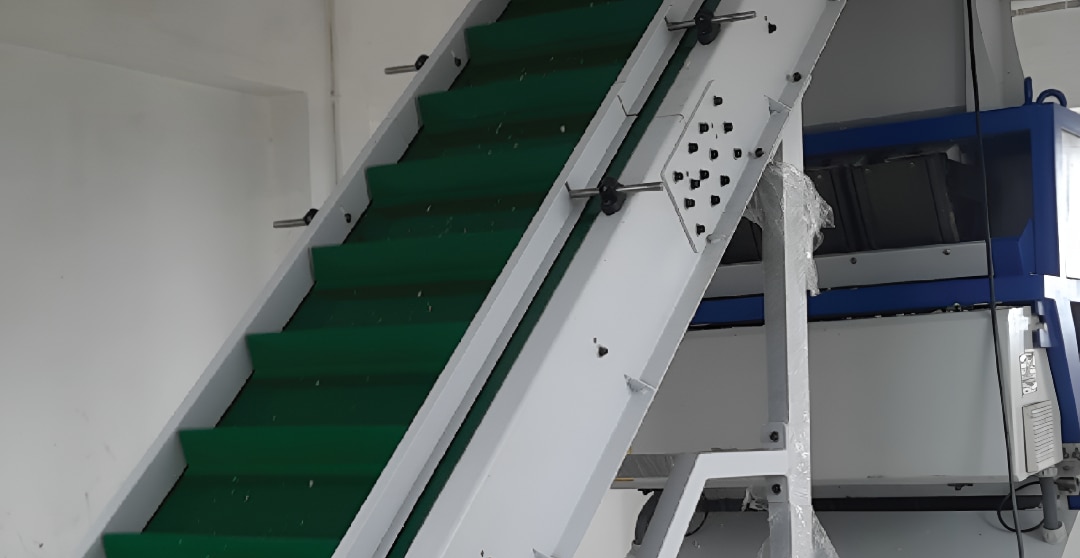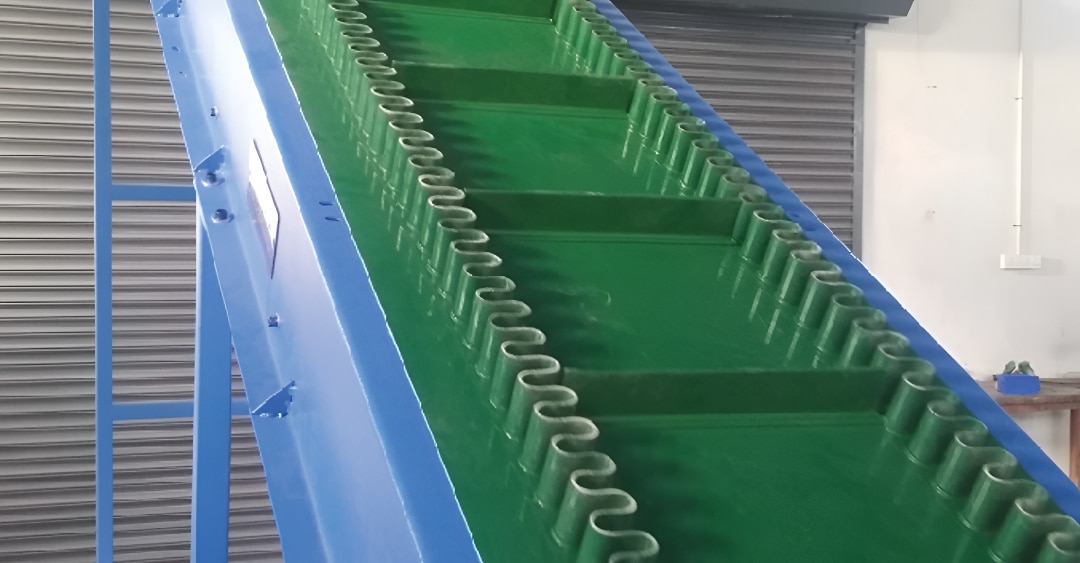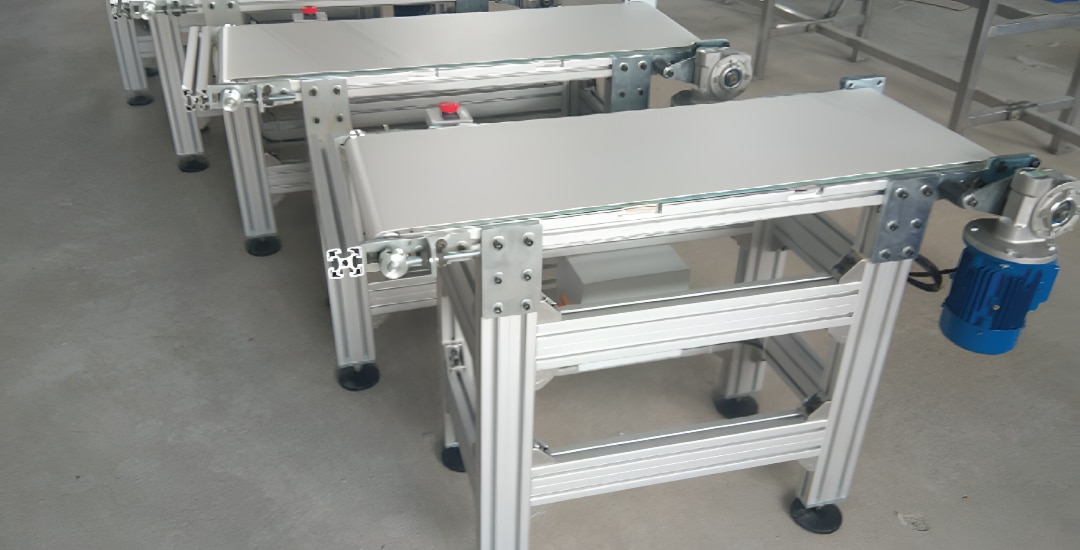
Flat Belt Conveyors
Description
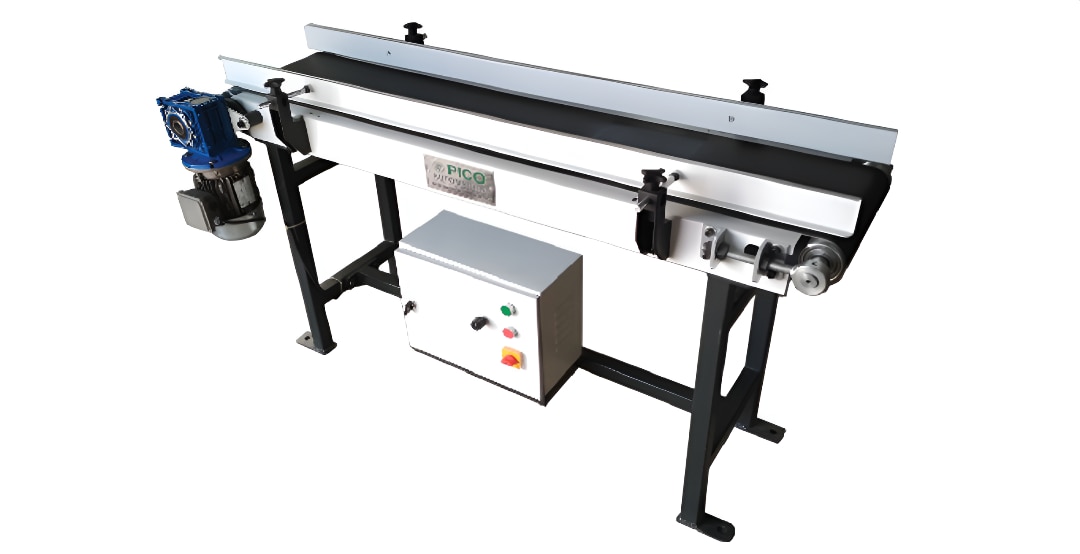
The system relies on a loop of belt wrapped around two main pulleys at either end:
The Drive Pulley: Connected to an electric motor, this pulley uses friction to pull the belt forward.
The Tail Pulley: An idle roller at the opposite end that provides tension and ensures the belt stays tracking in a straight line.
The Support Bed: Underneath the moving belt sits either a solid sheet of metal (Slider Bed) for light loads or a series of rollers (Roller Bed) to reduce friction for heavier loads.
Key Features & Advantages
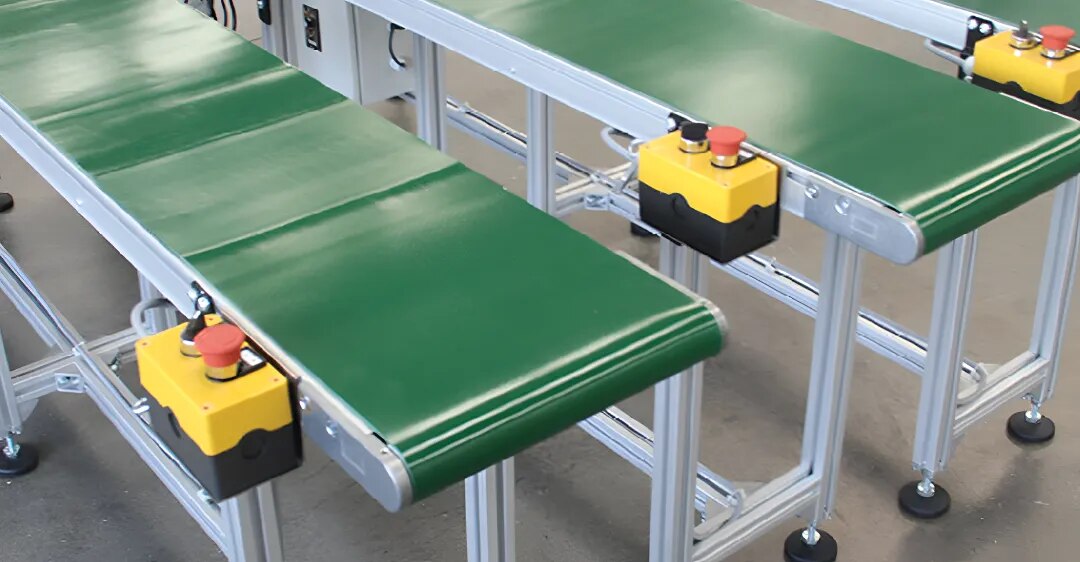
Smooth and Continuous Transport: Because the surface is entirely flat and seamless, it provides an exceptionally stable ride. This prevents small, delicate, or oddly shaped items from tipping over or falling through gaps.
Versatility: Can transport a vast array of product types—from tiny electronic components and loose parts to heavy cardboard boxes and packaged foods.
Variable Speed & Control: Easy to integrate with variable frequency drives (VFDs) to precisely control production speeds, slow down for manual inspection, or speed up for sorting.
Cost-Effective: Simple design translates to lower upfront engineering and manufacturing costs compared to complex modular or powered roller networks.
Common Applications
Flat belt conveyors are the foundational backbone of general manufacturing and logistics:
Packaging & Shipping Lines: Transporting sealed boxes, mailers, and envelopes through labeling, taping, and taping machines.
Assembly Lines: Moving electronics, appliances, or consumer goods gradually past assembly workers or robotic arms.
Inspection & Sorting Zones: Providing a steady, flat workspace for quality control inspectors to review products or scan barcodes.
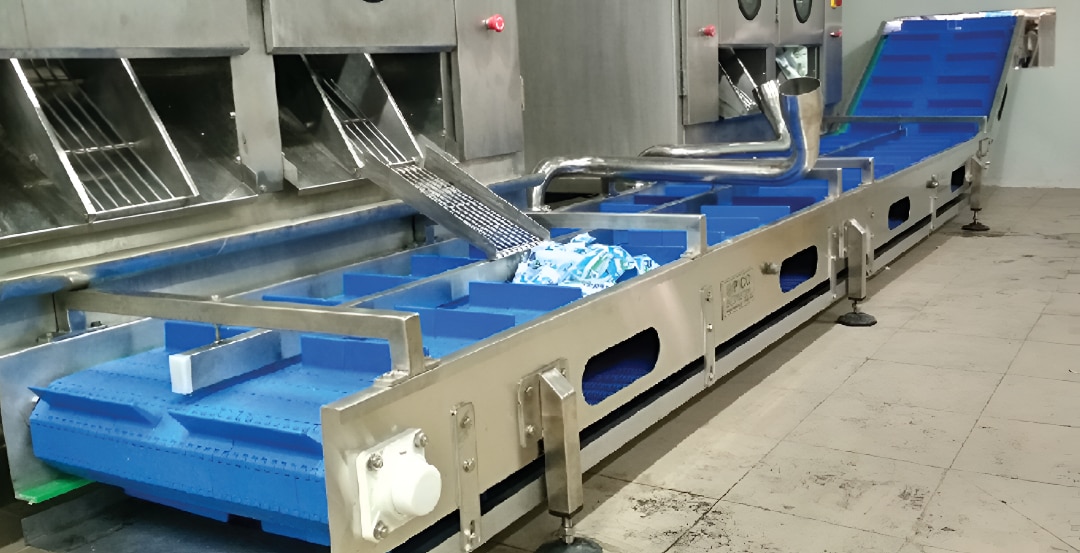
Food & Pharmaceutical Packaging: Using specialized food-grade polyurethane (PU) belts to transport wrapped snacks, bottled medications, or personal care products safely.
Limitations to Consider
No Accumulation: Items cannot back up or queue up on a standard flat belt while it's moving. If a box stops, the friction of the moving belt underneath will cause the packages to crash, pile up, or damage the bottom of the product.
Strict Tracking Maintenance: The belt must remain perfectly centered. If the tension is uneven, the belt can drift to one side, causing frayed edges and structural damage over time.