Inclined Belt Conveyor
Description
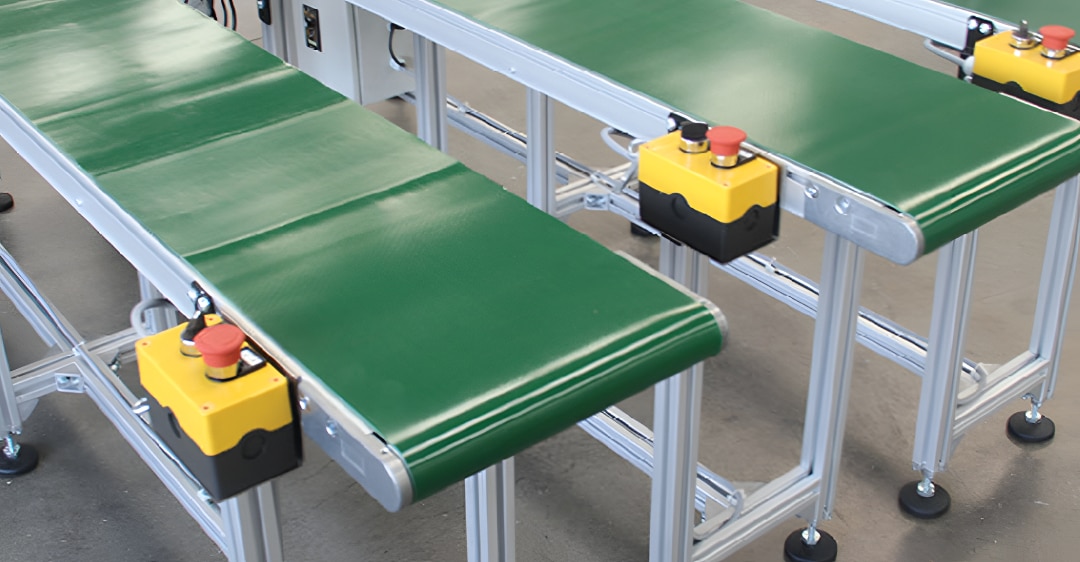
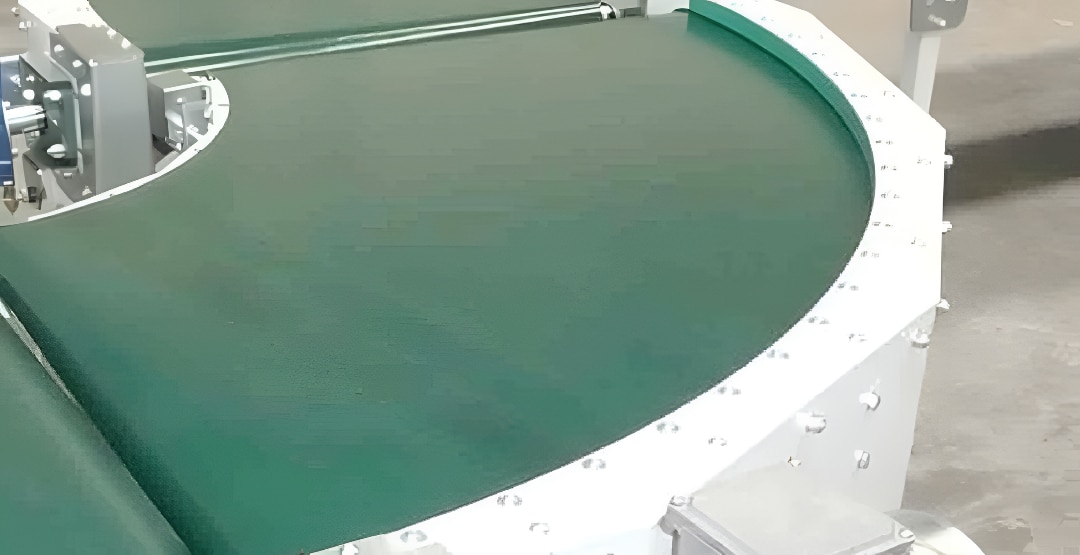
It operates similarly to a standard flat belt conveyor—using a continuous loop of fabric, rubber, or plastic belt stretched over a motorized dynamic bed. However, to handle the elevation changes smoothly, it incorporates specialized modifications:
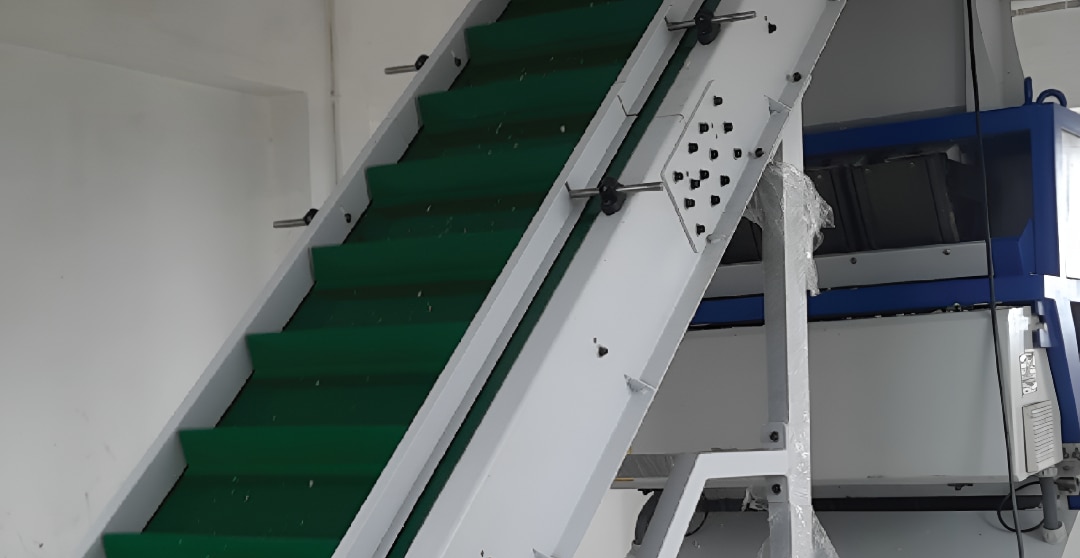
High-Friction Belting (Rough Top): The surface of the belt is given a textured, “rough top” pattern made of rubber or PVC to grip the bottom of packages.
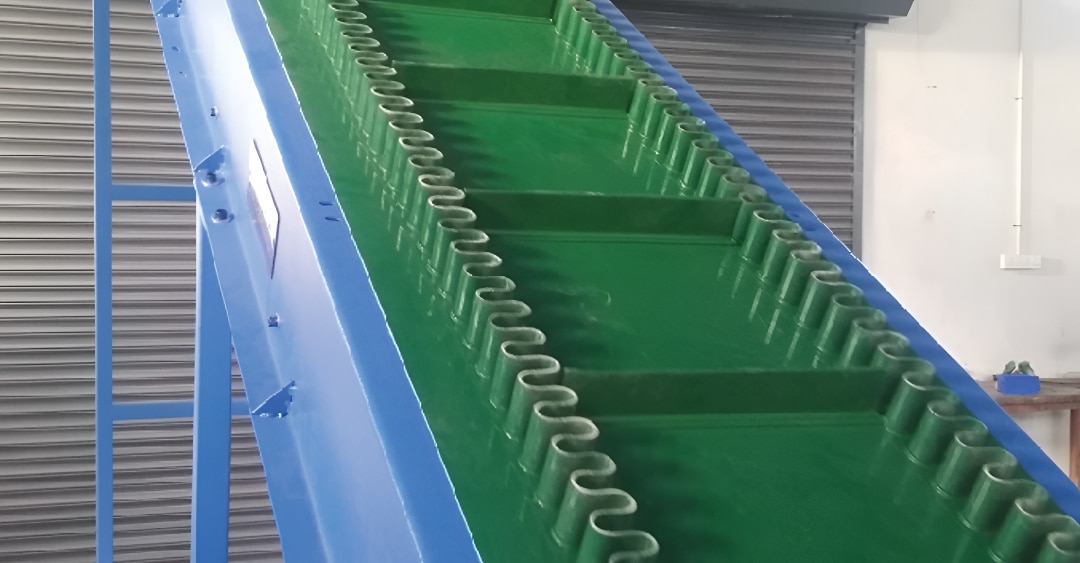
Cleated Belts: For steeper angles, raised vertical barriers or “cleats” (T-shaped or L-shaped ribs) are integrated directly onto the belt surface. These act as mini-shelves that physically catch and carry the product upward.
Corrugated Sidewalls: Often paired with cleats, these flexible walls run along the edges of the belt to keep loose materials (like grain or plastic pellets) from spilling off the sides.
Key Features & Advantages
Smooth Elevation Transitions: Provides a continuous, uninterrupted flow of goods between multi-tiered mezzanines, floors, or overhead lines.
Versatile Material Handling: Can handle everything from large, bulky cardboard boxes to loose bulk materials like gravel, powders, or recycling scraps.
Controlled Braking: Equipped with motorized brake systems or backstops that automatically lock the belt in place if power is lost, preventing a heavy line of packages from cascading backward.
Common Applications
Inclined belt conveyors are essential workhorses in facilities with vertical layouts:
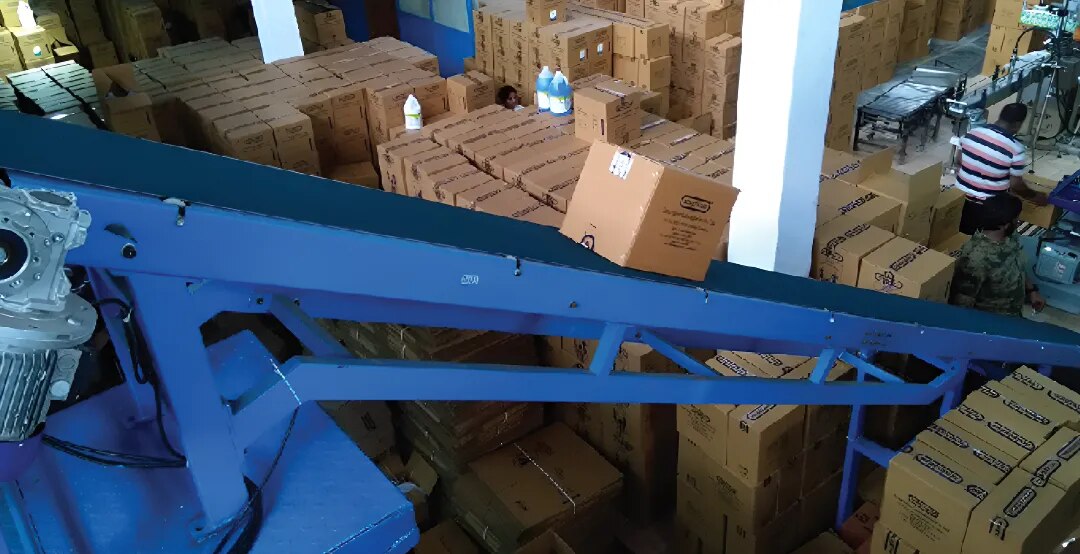
Distribution Centers & E-commerce: Transporting incoming packages up from floor-level receiving docks onto overhead sorting lines or multi-level picking mezzanines.
Food Processing & Agriculture: Elevating raw items (like vegetables, grains, or coffee beans) up into processing hoppers, blenders, or packaging machines.
Recycling & Waste Management: Moving bulk crushed glass, plastics, or shredded paper out of sorting pits up into massive storage bins or compactors.
Baggage Claim: Transporting luggage up from underground airport sorting tunnels to the public terminal carousels.