Coding & Printing Belt Conveyors
Description
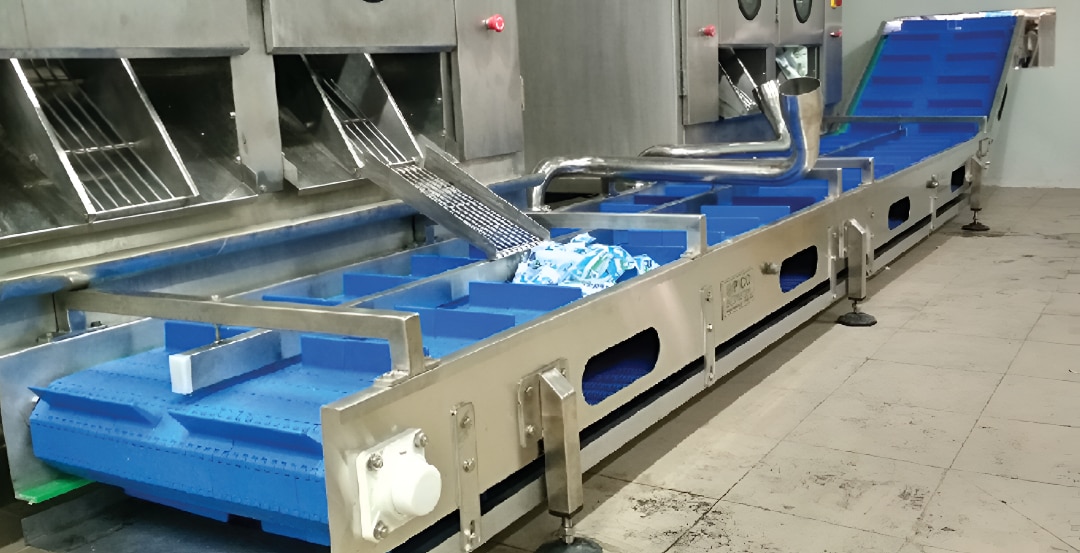
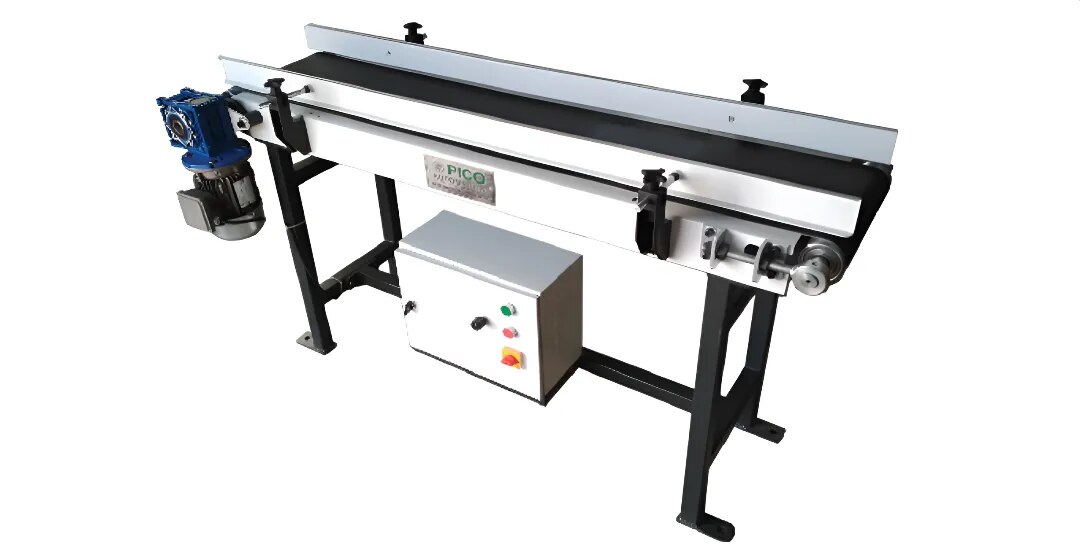
Products (such as empty boxes, plastic bottles, or pouches) are placed onto a high-grip belt. As they pass through a designated “printing zone,” a photo-eye sensor detects the leading edge of the product. This triggers an industrial printer mounted to the conveyor frame to spray ink or fire a laser at the exact microsecond required, applying crisp text or graphics while the item is in motion.
Key Features & Advantages
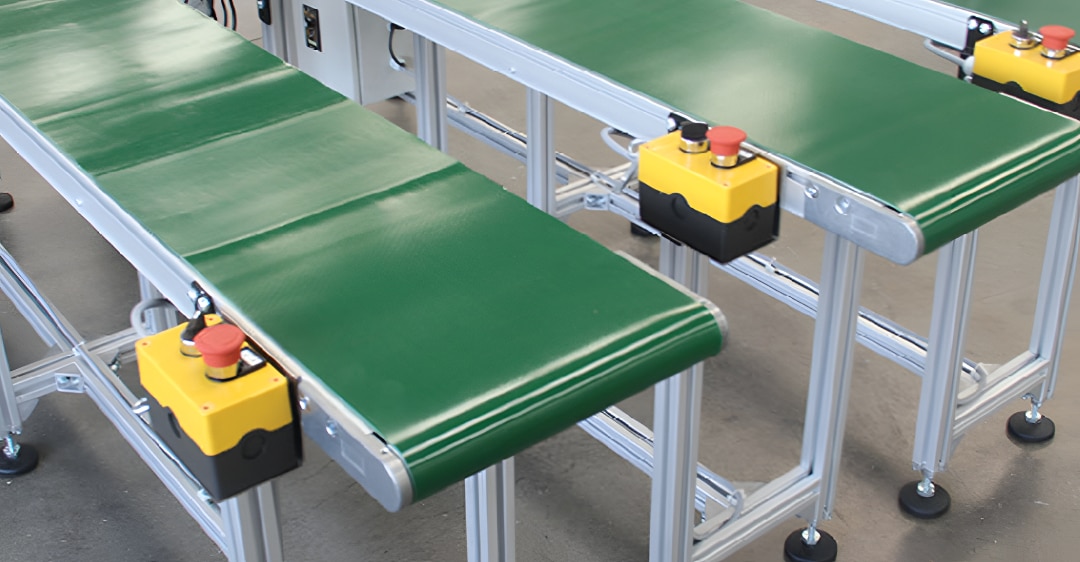
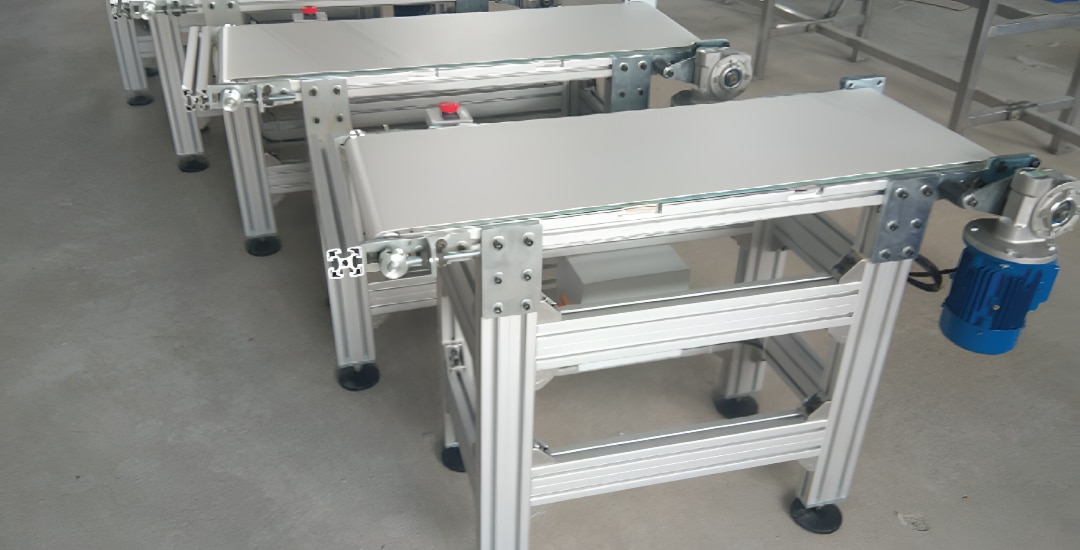
Vibration-Free Motion: Built with heavy-duty aluminum or steel frames and perfectly balanced rollers to eliminate the micro-vibrations that distort printed codes.
Integrated Printer Mounts: Features built-in, highly adjustable brackets designed to hold printheads (like Videojet, Domino, or Linx systems) at the exact distance and angle needed from the product.
High-Grip, Anti-Static Belts: Typically uses seamless PVC or rubber belts that prevent items from slipping or sliding during acceleration, ensuring consistent spacing between products.
Variable Speed Control: Equipped with precise digital speed controllers (VFDs) so the conveyor speed can be perfectly synchronized with the printing frequency (dots per second) of the printhead.
Common Applications
Printing belt conveyors are critical checkpoints in packaging lines across almost every consumer goods industry:
Pharmaceuticals: Printing tracking serial numbers, QR codes, and manufacturing dates onto medicine boxes or pill bottles for regulatory compliance.
Food & Beverage: Applying “Best Before” dates onto milk jugs, snack bags, and beverage cans right before they are packed into larger shipping boxes.
Cosmetics & Personal Care: Coding batch numbers onto the bottoms of shampoo bottles or tube crimps.
Logistics & Warehousing: Automatically applying shipping labels or printing routing barcodes onto cardboard boxes moving at high speeds.