Manual sample weighing can reveal whether some packages meet their target weight, but it cannot inspect every product moving through a high-speed production line. An Online Checkweigher System provides continuous, automatic verification by weighing individual packs while they remain in motion.
This allows manufacturers to identify weight deviations immediately without slowing routine production.
What Happens During Online Checkweighing?
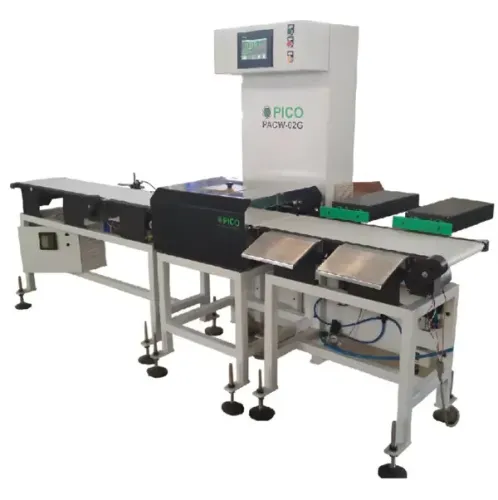
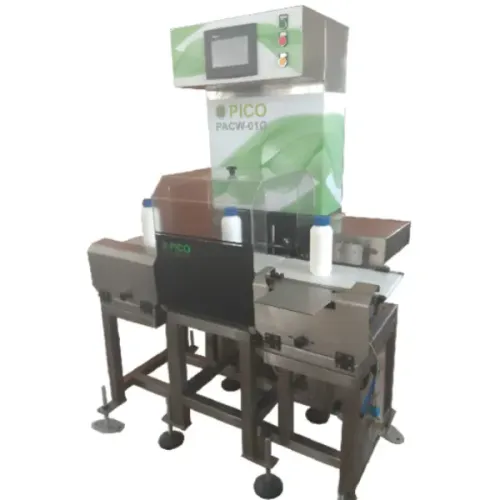
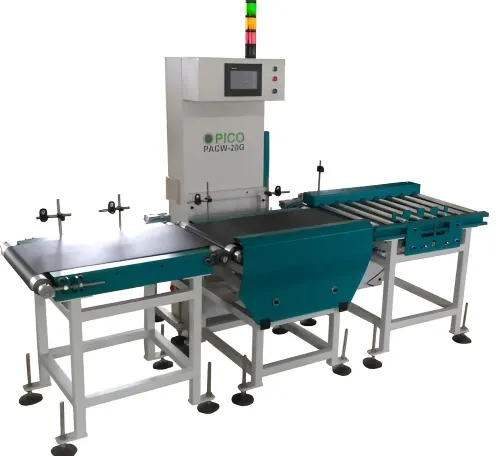
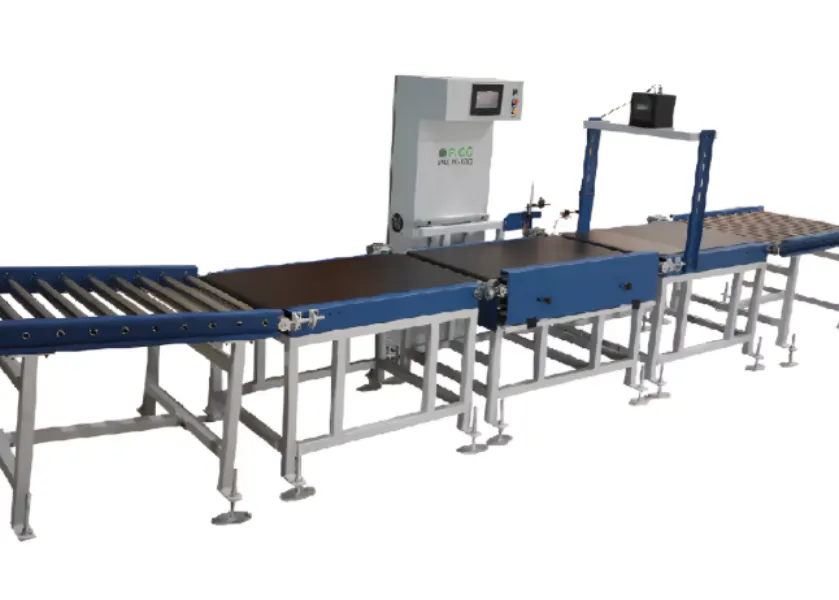
Products enter the system through an infeed conveyor, move onto a weighing belt, and then pass to the discharge section. Sensors establish the correct timing, while the weighing mechanism captures the product weight during movement.
The control system compares each reading with preset limits. Products are typically classified as:
- Underweight
- Within the accepted range
- Overweight
Any pack outside the permitted limits can be removed automatically using a suitable rejection mechanism. Production data can also be displayed or recorded for review.
Why Is It Better Than Periodic Sampling?
Periodic sampling remains useful for certain quality checks, but it provides only a snapshot of production. Deviations occurring between samples may remain unnoticed.
An online system inspects each product and can identify gradual changes in the filling process. For example, if package weights begin moving consistently towards the upper limit, production teams can investigate the filler before excessive giveaway develops.
This continuous visibility supports faster corrective action and more consistent output.
Reducing Product Giveaway
Overfilling may appear safer than underfilling, but unnecessary product in every pack can create a significant cumulative cost. Even a small excess multiplied across thousands of daily units can reduce margins.
Checkweigher data helps production teams assess average weight and variation. The objective is not to fill every pack exactly to one identical value, which may be unrealistic, but to maintain a controlled process within approved limits.
Better feedback can help operators optimise the upstream filling equipment while continuing to protect against underweight products.
Supporting Traceability and Reporting
Depending on its control configuration, an online checkweigher may record information such as:
- Total packs inspected
- Accepted and rejected quantities
- Average product weight
- Minimum and maximum readings
- Underweight and overweight counts
- Product or batch information
- Alarm and stoppage history
These records can support internal quality reviews, customer requirements, and production investigations. Data requirements should be discussed during system design because different plants use different reporting and connectivity standards.
Where Is the System Commonly Used?
Online checkweighing is relevant for many packaged goods, including food products, beverages, cosmetics, detergents, engineering components, medicines, and consumer products.
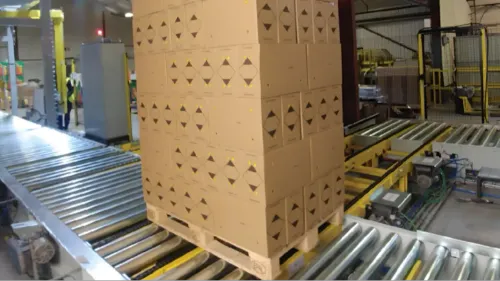
Across Coimbatore’s diverse manufacturing sector, the technology can be incorporated after filling, sealing, labelling, or final packaging. Placement depends on what the business needs to verify. A system checking individual containers may be installed earlier than one confirming the weight of complete cartons.
Conditions That Influence Performance
Stable checkweighing requires controlled product transfer. Irregular gaps, belt vibration, drafts, unstable containers, and poor conveyor alignment can interfere with readings.
The equipment should therefore be selected as part of the complete line rather than treated as an isolated weighing scale. Pico Automation evaluates conveyor movement, product characteristics, line speed, and rejection needs when developing systems for industrial users in Tamil Nadu.
Planning an Online Checkweighing Project
A useful project brief should state the product range, package dimensions, target weights, tolerance limits, speed, available space, and required data functions. It should also identify hygiene standards, cleaning methods, electrical specifications, and integration points.
An online checkweigher delivers the greatest value when its mechanical design, control logic, and conveyor arrangement are aligned with the real production process. With that foundation, it can strengthen inspection coverage, reduce avoidable waste, and give quality teams better visibility into every batch.
Keywords