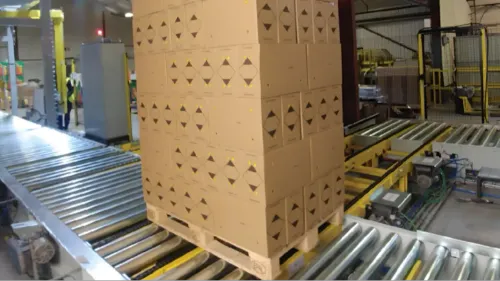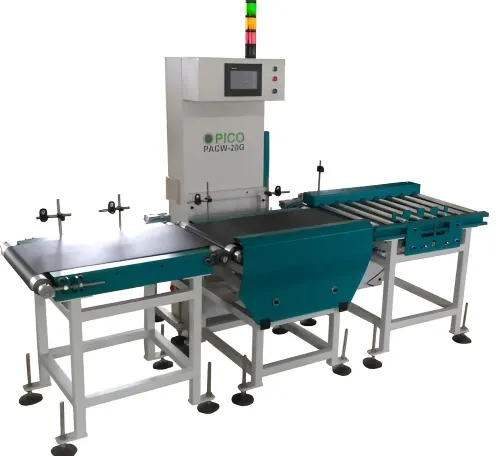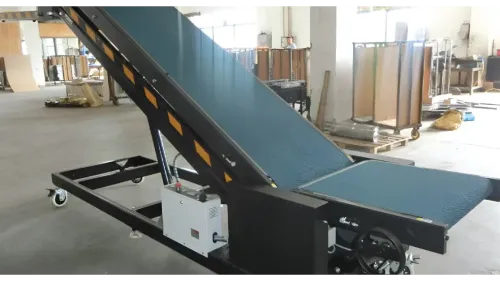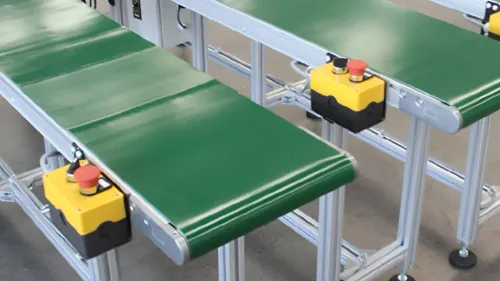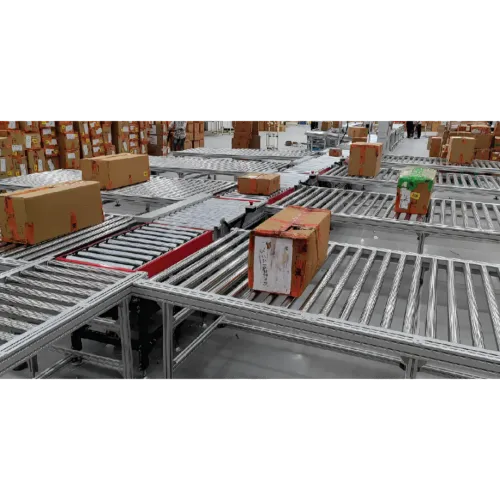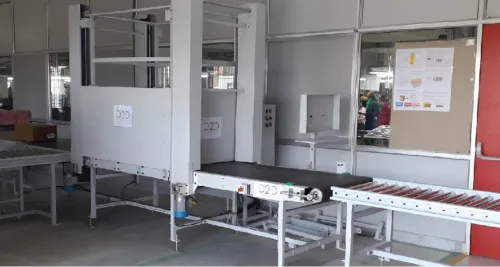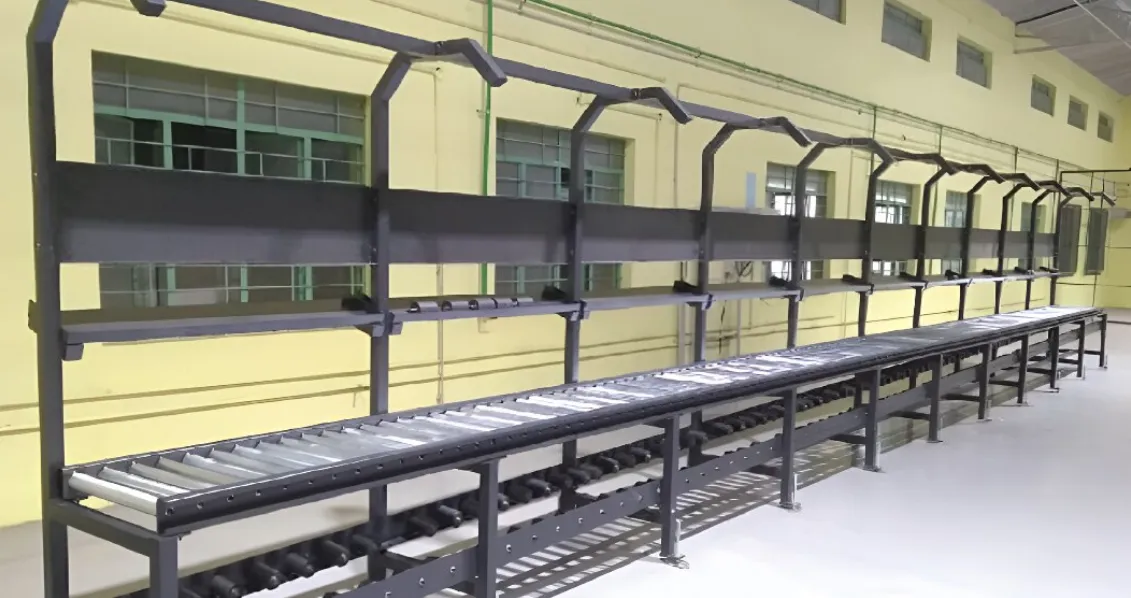
A gravity conveyor moves products over freely rotating rollers using manual force or a controlled slope. Because the rollers are not powered, the system can be a simple and economical choice for carton movement, order-picking zones, assembly workstations, packing areas, and dispatch operations.
However, a Gravity Roller Conveyor System will only work reliably if the load, roller spacing, slope, and operating method are correctly matched.
Check Whether the Product Can Travel on Rollers
The base of the product is the first consideration. Rigid, flat-bottomed cartons, totes, trays, and certain pallets generally travel more predictably than soft bags or irregular packages.
A product with a damaged, flexible, or deeply ribbed base may drag, wobble, or become trapped. Very small items can fall between rollers if spacing is excessive.
A common design principle is to keep multiple rollers beneath the product at all times, but the exact requirement depends on load stability and base construction. Sample testing remains advisable.
Select the Correct Roller Capacity
Roller diameter, tube thickness, shaft type, bearing arrangement, and frame spacing influence load capacity. The conveyor must support both the individual product and any accumulation that may occur.
Buyers should state the maximum unit weight rather than only the average. If several heavy cartons may collect in one section, the frame and supports must withstand the combined load.
For pallet handling, a purpose-designed heavy-duty arrangement is usually required.
Decide Between Level and Declined Operation
A level gravity conveyor requires operators to push products manually. This may suit short distances and workstation transfers.
A declined conveyor uses gravity to move products, but the slope must be controlled. Too little slope can leave cartons stranded, while too much can cause excessive speed, collisions, damage, or unsafe handling at the discharge point.
Product weight and roller resistance affect travel speed, so different cartons may behave differently on the same slope. Brake rollers, stops, or controlled sections may be necessary.
Plan Curves, Gates, and Workstations
Gravity conveyors can be configured with straight sections, curves, expandable units, transfer tables, and hinged gates. Each feature should support the way employees and materials move through the facility.
A gate may preserve pedestrian access, but it must be easy to operate and secure safely. Curves should be wide enough to prevent long cartons from catching on the frame. Workstation height should reduce unnecessary bending and lifting.
Review Safety Requirements
Although the conveyor has no powered drive, it still presents potential pinch points and movement hazards. Heavy cartons gathering speed on a decline can injure employees or damage products.
End stops, side guides, controlled release mechanisms, and suitable guarding may be required. The floor layout should keep emergency routes clear and prevent conveyor sections from creating unsafe crossings.
Compare Purchase Price With Operating Fit
Gravity systems generally consume no drive energy and contain fewer powered components to maintain. These advantages can make them cost-effective for the right application.
They are not a substitute for powered conveying when loads must move uphill, travel long distances, maintain controlled spacing, or interface automatically with machinery. Choosing gravity equipment solely because it is less expensive can create manual effort and unstable flow.
Request a Site-Based Recommendation
Pico Automation supplies material-handling solutions for warehouses, assembly areas, and manufacturing plants in Coimbatore and across Tamil Nadu. A site assessment can establish product suitability, section lengths, support positions, slope, curves, and traffic requirements.
Before purchasing, test the lightest, heaviest, smallest, and least stable products. A properly engineered gravity conveyor offers uncomplicated movement and low operating demands; an incorrectly specified one simply transfers the handling problem to another part of the facility.
Keywords