Modular belt conveyors are widely used where conventional continuous belts may not provide the required flexibility, drainage, tracking stability, or maintenance convenience. Their interlocking plastic modules can be assembled in different widths and configurations, making them suitable for food processing, packaging, FMCG production, and many industrial transfer applications.
Choosing a Modular Belt Conveyor Manufacturer should begin with the process requirement rather than the belt pattern alone.
Confirm Product Characteristics
The manufacturer needs accurate information about the products being conveyed. Provide the smallest and largest dimensions, individual weight, surface condition, temperature, and packaging format.
Tiny products may require close-pitch modules and carefully designed transfers. Wet or oily products may need drainage and suitable grip. Fragile packs require smooth acceleration and minimal impact at conveyor junctions.
If multiple products will use one line, the system must accommodate the complete range.
Define the Operating Environment
Food and beverage plants may require frequent washdown, corrosion-resistant construction, and hygienic access. Packaging lines may prioritise clean transfers, stable indexing, and integration with inspection or sealing equipment.
Ask whether the proposed belt and conveyor structure are suitable for:
- Water and cleaning chemicals
- Product oils or grease
- High or low temperatures
- Dusty production conditions
- Direct food contact, where applicable
- Continuous or multi-shift operation
- Inclined, curved, or accumulation movement
Material suitability should be confirmed against the actual process and applicable standards.
Review Transfer Design
Product transfer is one of the most important parts of a modular conveyor. Large gaps between conveyor sections can cause small packages to tilt, jam, or fall.
The manufacturer may consider nose bars, small-diameter sprockets, dead plates, transfer rollers, or synchronised conveyor speeds. The appropriate method depends on the product base and the required direction of movement.
Testing representative products across transfer points can identify problems before installation.
Examine Belt Support and Tracking
Modular belts travel over wear strips and are driven by sprockets. Proper support layout, shaft alignment, belt engagement, and allowance for thermal expansion are necessary for stable operation.
Ask how the design addresses belt sag, uneven loading, side travel, and access for tension or inspection. The structure should support the load without unnecessary friction or energy consumption.
Check Cleaning and Maintenance Access
A conveyor may appear hygienic while still containing difficult-to-reach areas beneath the belt or around supports. Where regular cleaning is required, the design should reduce horizontal ledges and allow access to product-contact zones.
Maintenance teams should be able to inspect sprockets, shafts, bearings, motors, and belt modules safely. Damaged modules should be replaceable without excessive dismantling.
Assess Safety and Controls
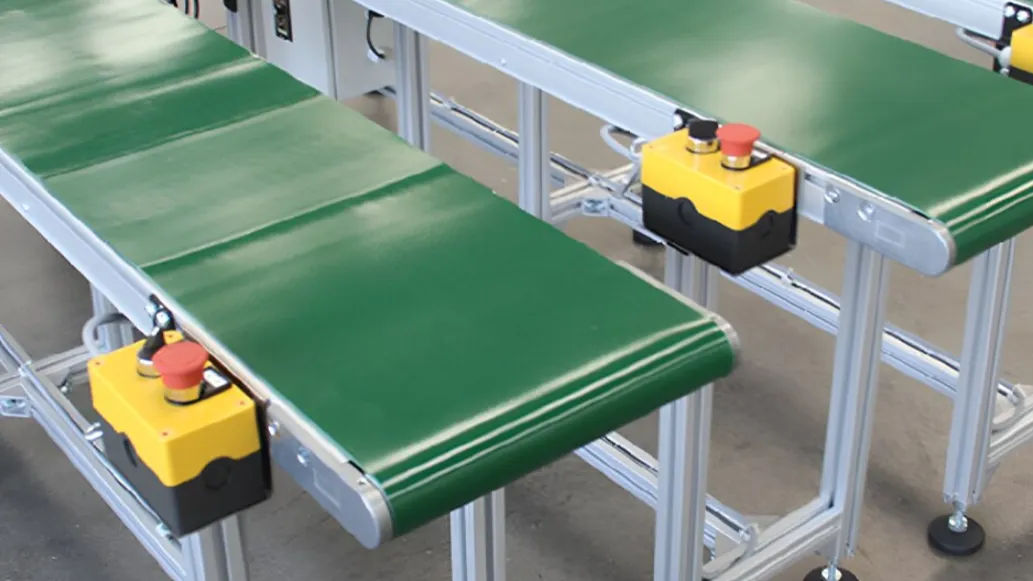
Guarding is required around drive systems, shafts, sprockets, and other hazardous points. Emergency-stop locations, start-up warnings, and safe isolation procedures should suit the complete line.
If the conveyor integrates with filling, packing, weighing, coding, or inspection machines, control signals and stop conditions must be clearly defined.
Evaluate the Supplier’s Application Experience
A useful supplier should ask detailed questions, examine samples, and explain why a particular belt style, speed, structure, and drive arrangement are being proposed.
Pico Automation designs industrial conveying solutions for customers in Coimbatore and across Tamil Nadu. Its experience with material handling and line integration can help plants evaluate more than the conveyor’s visible structure.
Before issuing a purchase order, confirm drawings, materials, motor specifications, controls, guarding, trial criteria, installation scope, spare parts, and service responsibilities. This checklist turns a general equipment enquiry into a clearly defined conveyor project.
Keywords