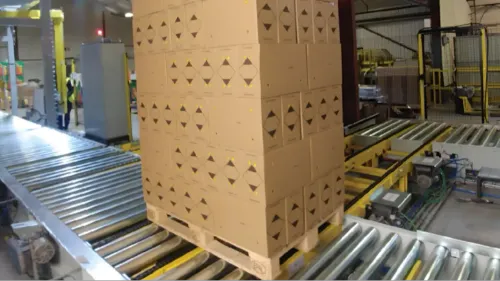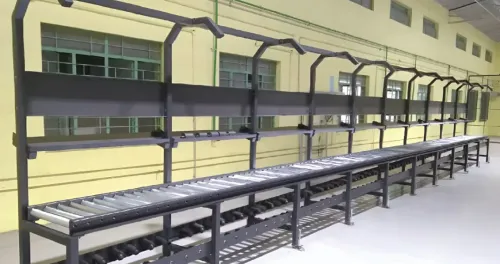
Baggage handling is one of the most visible operational responsibilities at an airport. Delayed, damaged, or misrouted luggage affects passengers, airline teams, security operations, and ground-handling efficiency.
An Airport Luggage Conveyor System must therefore provide controlled baggage movement while supporting screening, check-in, sorting, reconciliation, transfer, and reclaim processes.
Understand the Complete Baggage Route
System planning should begin with the full journey of a bag rather than an individual conveyor section. Depending on the airport, luggage may pass through check-in conveyors, screening equipment, sorting zones, make-up areas, transfer handling, and arrival carousels.
Each interface requires coordinated dimensions, speeds, controls, and communication. A reliable section can still cause disruption if bags transfer poorly to the next machine.
Early planning should involve airport operators, baggage handlers, security stakeholders, airlines, consultants, civil contractors, and automation specialists.
Design for Diverse Baggage
Passenger luggage is highly variable. Bags may be soft, rigid, wheeled, strapped, oversized, unusually shaped, or poorly balanced. Handles and loose straps can catch on gaps or projections.
Conveyor design should reduce abrupt transitions and minimise trapping points. Belt type, side guarding, curve geometry, incline angle, and transfer arrangements must accommodate the expected baggage profile.
Oversized or non-conveyable items may require a separate handling route instead of being forced through standard baggage equipment.
Maintain Tracking and Bag Separation
Baggage should remain sufficiently separated for reliable identification and routing. If bags overlap or travel too closely, sensors and tracking systems may struggle to maintain the correct identity.
Controls may regulate induction timing and conveyor speed to create suitable gaps. Tracking can involve barcode readers, tag data, RFID technology, or other approved identification methods.
The chosen approach must coordinate with airport operational systems and the project’s required data standards.
Prepare for Peak Passenger Demand
Average throughput alone is not enough for capacity planning. Airports experience concentrated demand around departure and arrival banks, seasonal travel, disruptions, and delayed flights.
The system should be assessed for peak baggage volume, queue behaviour, available accumulation, and recovery after stoppages. Engineers should also consider what happens if a screening unit or downstream route becomes temporarily unavailable.
Suitable buffering can prevent one interruption from stopping the entire check-in area.
Prioritise Safety and Maintainability
Airport conveyors operate in environments used by passengers, ground staff, security personnel, and maintenance teams. Appropriate guarding, emergency-stop arrangements, restricted access, warning devices, and safe maintenance procedures are essential.
Maintenance access should be incorporated into the layout. Motors, bearings, sensors, belts, and control panels must be reachable without extensive dismantling. Critical components may require redundancy or rapid-replacement provisions, depending on the airport’s operating requirements.
Use Clear Fault Diagnostics
Operators need to know where and why a stoppage has occurred. Zone-level indications, alarm histories, interface status, and intuitive supervisory screens can shorten response time.
Remote monitoring can improve visibility, but it does not replace trained local teams and documented procedures. Staff must understand safe jam clearance, restart sequences, equipment isolation, and escalation protocols.
Select a Provider With Integration Capability
Airport projects demand careful coordination between mechanical equipment, electrical work, automation, civil layouts, screening interfaces, and operational technology. Pico Automation applies conveyor and material-handling experience to projects requiring customised movement and control.
For infrastructure contractors serving airports in Tamil Nadu or sourcing engineering support from Coimbatore, evaluation should include design capability, documentation, testing procedures, commissioning support, and long-term spare-parts planning.
A dependable baggage system is built through detailed interface management. When capacity, baggage behaviour, tracking, maintainability, and operational contingencies are addressed together, luggage can move through the airport with fewer interruptions and greater control.
Keywords