Slat Chain Conveyors
Description
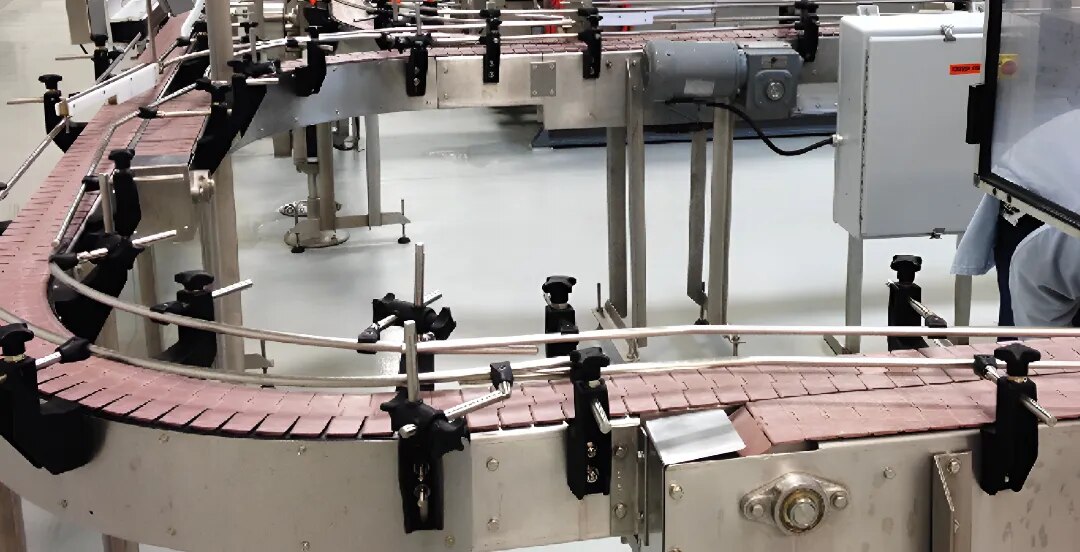
A Slat Chain Conveyor (often simply called a slat conveyor) is a rugged material handling system that uses a continuous loop of overlapping or interlocking flat plates—called slats—to move heavy, hot, or oddly shaped products.
Instead of a flexible fabric or rubber belt, these slats are typically made of hard plastics, steel, or aluminum and are bolted to a motorized twin-strand chain. This creates a solid, flat, conveyor “bed” that operates much like the tracks on a bulldozer or a continuous escalator.
Key Features & Advantages
High Load & Impact Resistance: Because the slats are backed by heavy-duty steel chains and a rigid structural frame, these conveyors can handle immense weight and absorb the impact of heavy items being dropped onto them.
Heat and Chemical Durability: Metal slats can transport components that are boiling hot, sharp, or covered in oils and chemicals—conditions that would quickly destroy a standard rubber belt.
Stable Flat Surface: The rigid slats create a perfectly flat, non-flexing surface. This prevents heavy or wide loads from tipping, sagging, or shifting during transit.
Fixturing Adaptability: Manufacturers can easily bolt custom fixtures, jigs, or clamps directly onto the metal slats to hold a product securely in a specific orientation as it moves down an assembly line.
Slat Chain vs. Crate Chain: What's the Difference?
While both rely on chains for power, they serve different layout purposes:
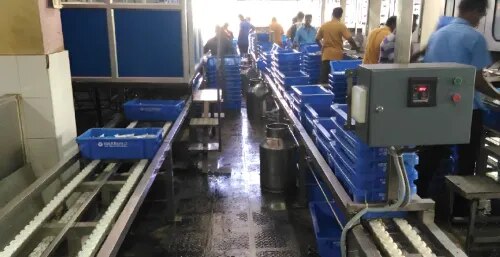
Crate Chain Conveyors use two or more bare strands of chain. The product (like a plastic bin) sits directly on top of the chains, leaving the center open.
Slat Chain Conveyors attach solid plates across the chains. The chains are hidden underneath, creating a continuous, solid moving platform.