Crate Chain Conveyors
Description
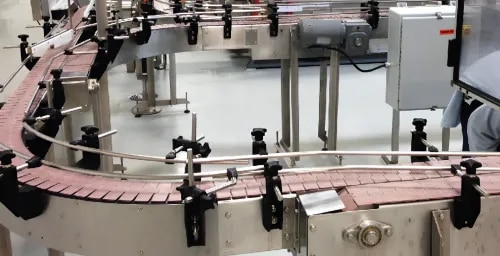
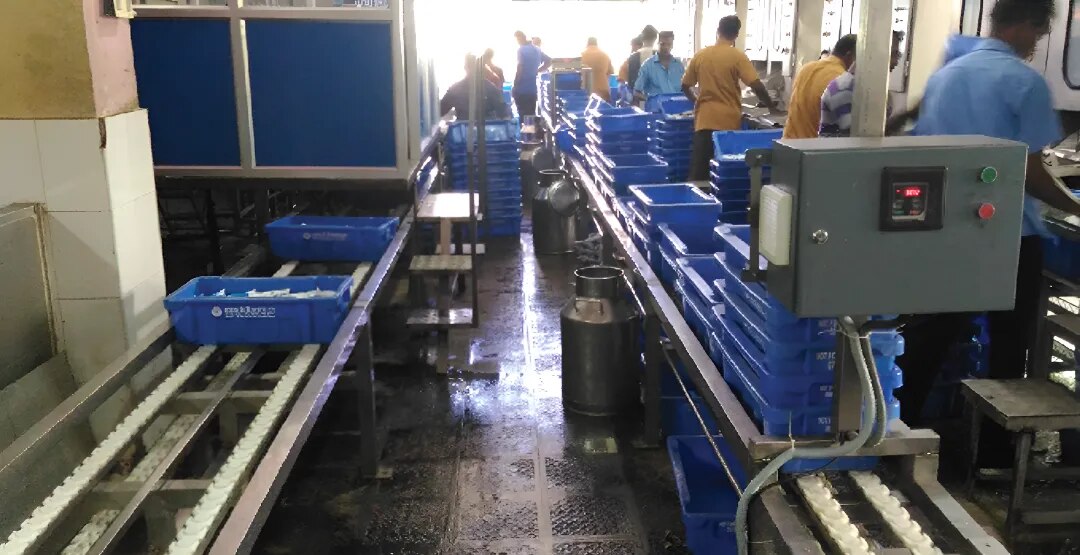
Instead of a continuous solid belt, a crate chain conveyor features two or more parallel strands of chain running inside dedicated tracks. The crates rest directly on top of these moving chains. Because the contact area is limited to the bottom edges of the crate, friction is minimized, making it incredibly efficient for continuous loops or long-distance hauling.
Key Features & Advantages
High Load Capacity: Built with rugged steel or engineered plastic chains, these systems easily handle heavy, fully loaded crates that might cause a standard fabric belt to sag or slip.
Open Frame Design: The space between the parallel chains is entirely open. This allows debris, dirt, or spilled liquids from washed crates to fall right through to the floor, keeping the conveyor clean and preventing jams.
Low Maintenance & Durability: Chains resist wear and tear far better than rubber or fabric belts, making them ideal for harsh industrial environments, washdown areas, or extreme temperatures.
Easy Accumulation: If crates need to back up (accumulate) at a workstation, the chains can slide smoothly underneath the stopped crates without damaging the product or burning out the motor.
Common Configurations
Depending on the facility's layout and needs, crate chain conveyors generally come in two styles:
Floor-Level / Low-Profile: Positioned very close to the ground, allowing workers to easily stack or unstack crates manually, or allowing forklifts to place entire pallets onto the line.
Elevated Ergonomic Height: Elevated to waist height to bring crates directly to operators at assembly, washing, or manual sorting stations.