
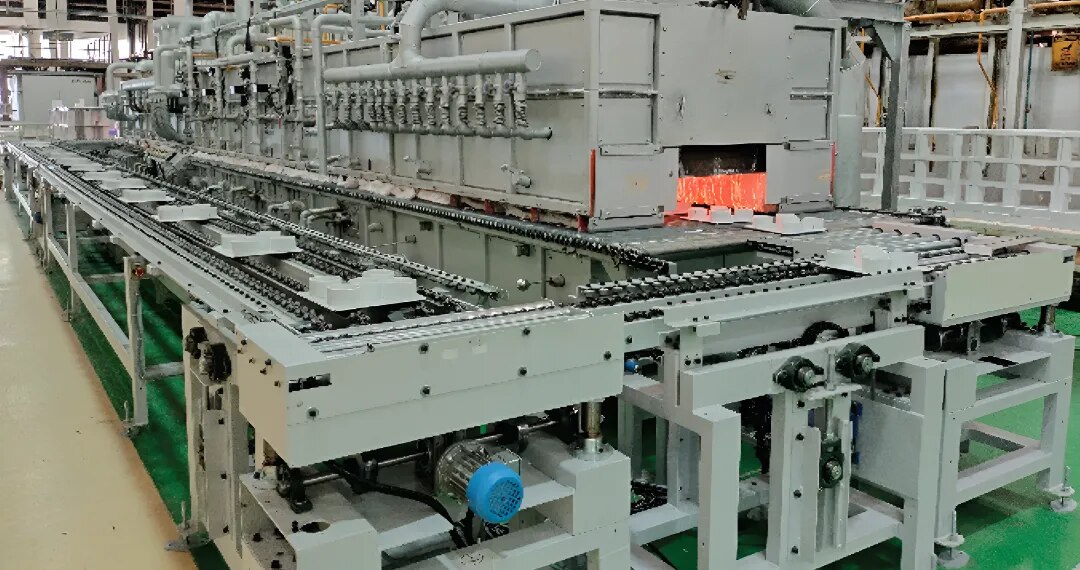
Track Chain Conveyor Line
Description
The system operates on a continuous loop. A motorized drive unit engages the chain, pulling it through the track network. Workpieces or products are suspended from or attached to trolleys that are connected to the chain.
Because the chain is flexible in multiple directions, the conveyor line can travel horizontally, climb vertically, bend around tight corners, and change elevations seamlessly to navigate tight factory floors.
A standard track chain conveyor system relies on a few critical modular parts:
The Enclosed Track: A tubular or rectangular steel housing that encloses the chain. This protects the chain from dust, paint, and debris, while also preventing lubricants from dripping onto the products below.
The Conveyor Chain: A high-strength, universal joint chain. Each link typically features horizontal and vertical wheels equipped with ball bearings to reduce friction and travel resistance as it navigates curves.
Drive Unit: The motorized powerhouse of the system. It uses a sprocket or a caterpillar drive dog mechanism to grab the chain and move it at a controlled, variable speed.
3. Product Protection
As highlighted by material handling experts like TECH Expert Engineering, the enclosed nature of the track ensures secure transport without the risk of products falling, getting damaged, or getting contaminated by external elements.
Take-Up Unit: A tensioning device (often spring-loaded or pneumatic) that maintains the proper tension on the chain loop, compensating for wear and temperature stretching.
Pendant/Carriers: The hooks, racks, or custom fixtures attached to the chain's trolleys that securely hold the parts being transported.
Major Advantages1. Space Efficiency Because these lines can climb completely vertical ($90^circ$), they utilize dead overhead space in a factory. This frees up valuable floor space for production machinery and foot traffic.2. Extreme Flexibility The universal link chain design allows for shorter radius curves and closer spacing of curve tangents. It can snake through tight spaces, make sharp turns, and adapt to complex building layouts where traditional conveyors wouldn't fit.