Pusher Rejection Option
Description
The pusher rejection mechanism operates in a split-second sequence to keep high-speed production lines flowing seamlessly:
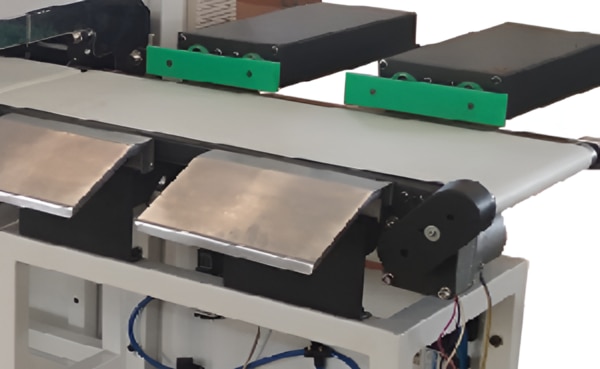
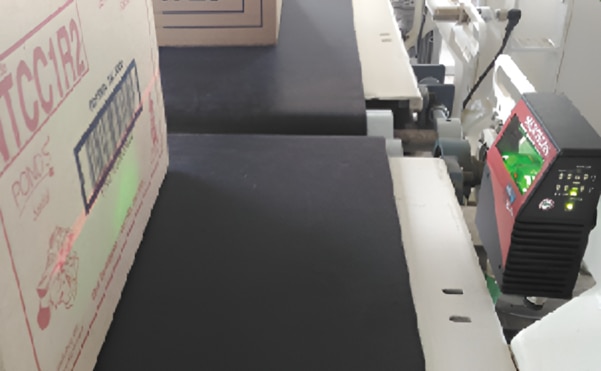
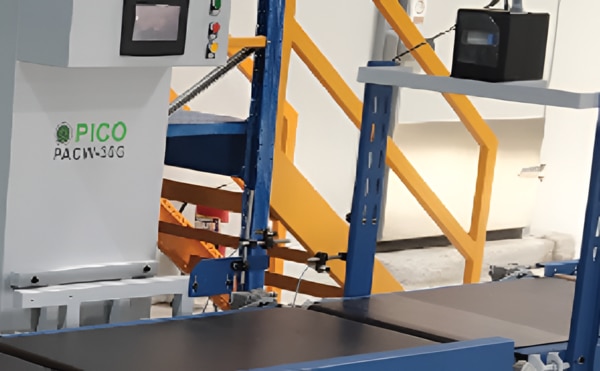
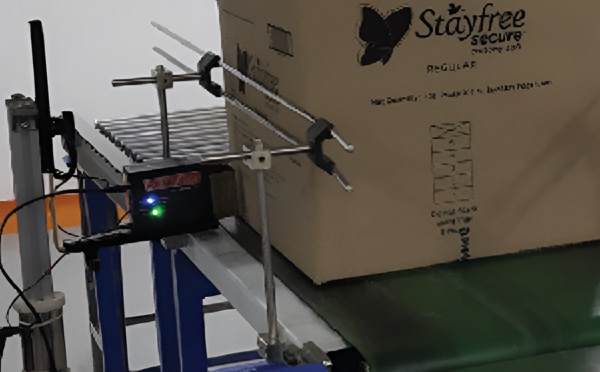
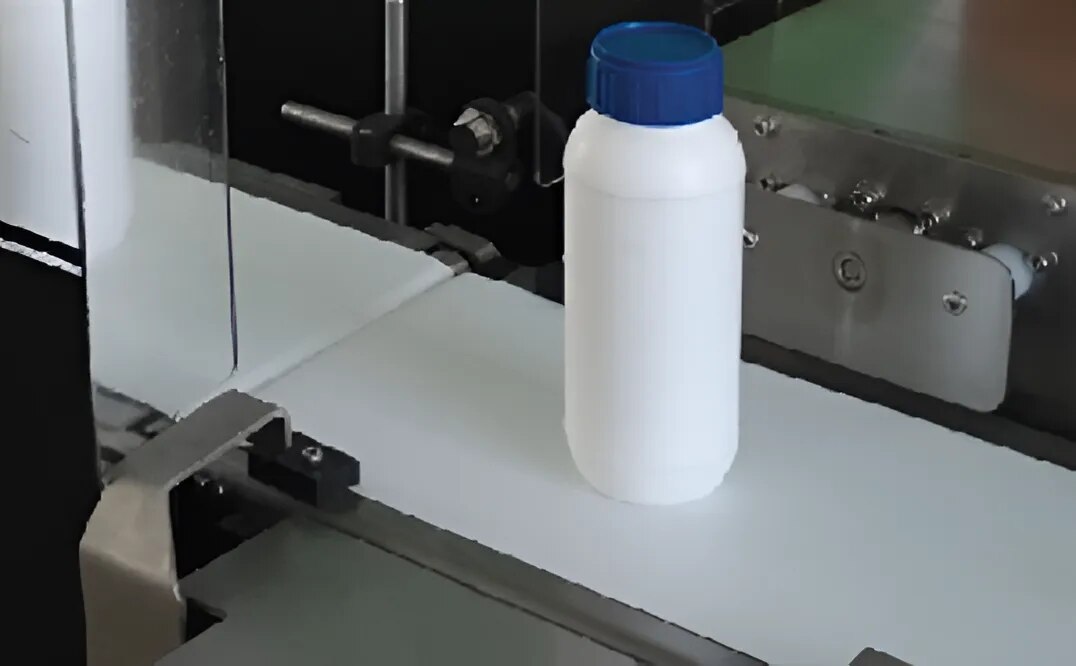
Defect Detection: As a product (e.g., a frozen chicken pack, a boxed commodity, or a heavy plastic jug) travels down the conveyor, an upstream sensor—like a Pico Check Weigher—evaluates it. If the item falls outside acceptable quality or weight parameters, a reject signal is instantly generated.
Precision Timing: A central Programmable Logic Controller (PLC) calculates the exact millisecond the defective product will arrive directly in front of the pusher face based on the speed of the conveyor belt.
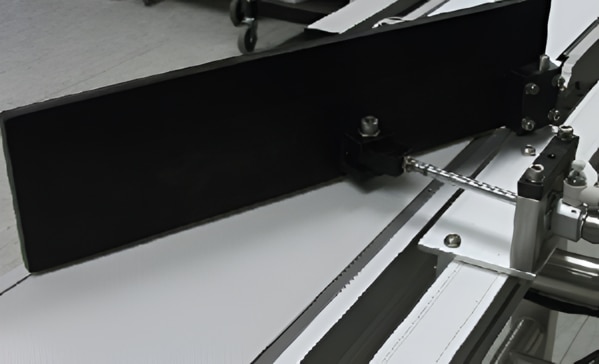
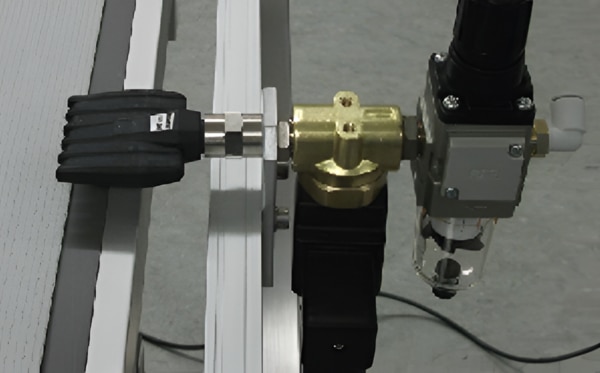
Pneumatic Stroke: The moment the item aligns with the mechanism, a pneumatic valve opens, releasing compressed air that drives a heavy-duty cylinder outward. A flat plate attached to the cylinder strikes the side of the product, pushing it 90
∘
off the line into a secure reject chute or collection bin.
Rapid Reset: The cylinder retracts instantly to its home position, resetting in milliseconds to ensure it is ready for the next passing item without interrupting the rest of the acceptable traffic.
Key Features & Advantages
High-Impact and Robust: Unlike delicate air jets or sweeping arms, a pusher is built to move substantial mass. It easily handles heavy cardboard cases, bulk meat portions, and tightly packed containers that other rejectors cannot budge.
Positive Separation: Because the stroke physically forces the product off the belt, there is virtually zero risk of a defective item accidentally slipping past and continuing down the primary packaging line.
Fail-Safe Design: Industrial pusher options are frequently enclosed in a protective guarding cage with verification sensors. If a rejected item fails to drop into the collection bin, or if the pneumatic pressure drops, the system can instantly trigger a line alarm or halt the conveyor.
Limitations to Consider
While incredibly reliable for rigid packaging, pushers have distinct design boundaries:
Product Fragility: The sudden mechanical impact of a pusher plate can bruise soft tissues (like raw, skinless fish fillets) or shatter unsealed glass jars. For fragile items, a gentler sweeping arm or drop-flap configuration is preferred.
Spacing Requirements: Because the pusher plate must extend and retract without hitting the next item in line, products must maintain a clean, uniform physical gap (singulation) on the conveyor.
Primary Applications
Pusher rejection modules are the standard choice for moving heavier or rigid consumer packaged goods:
Food Processing: Discarding overweight or underweight bulk boxes of frozen poultry, tubs of dairy, or tightly sealed bags of rice.
Logistics & Warehousing: Shunting mislabeled shipping boxes or incorrect orders off a main routing vein into a secondary inspection lane.
Chemicals & Agro-Chemicals: Deflecting improperly filled plastic jugs, motor oil canisters, or paint cans out of the primary distribution loop.