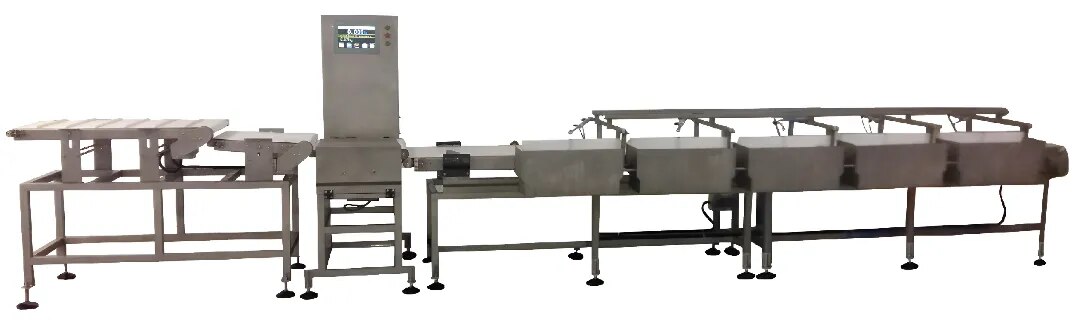
Pico Sorting & Grading System
Description
An industrial grading system operates through a continuous four-step cycle:
Singulation and Feeding: Mixed items are placed onto an infeed conveyor. The system accelerates or spaces them out so they pass through the inspection zone individually.
Sensor Inspection: As each item passes a specific zone, advanced sensors analyze it in real time. Depending on the criteria, the system uses:
Load Cells (Dynamic Weighing): Captures the exact weight of a moving item in milliseconds.
Vision Systems (Cameras): Analyzes the dimensions, shape, surface defects, or color of the product.
Data Processing (The Brain): A central Programmable Logic Controller (PLC) or computer instantly matches the sensor data against predefined rules (e.g., “If weight is between 200g and 250g, assign to Grade B”).
Diverting / Routing: The PLC triggers a mechanical mechanism further down the line to physical route the product into its designated collection bin, chute, or crate.
Common Mechanical Sorting Methods
Once an item is assigned a grade, different mechanical mechanisms are used to separate it from the main line:
Drop-Flap / Trap Door: The conveyor belt has sections that drop down momentarily, letting the item fall directly into a bin underneath. Commonly used for small items like shrimp or fruit.
Flipper / Arm Diverter: A mechanical arm swings across the belt to gently guide the item into a side lane.
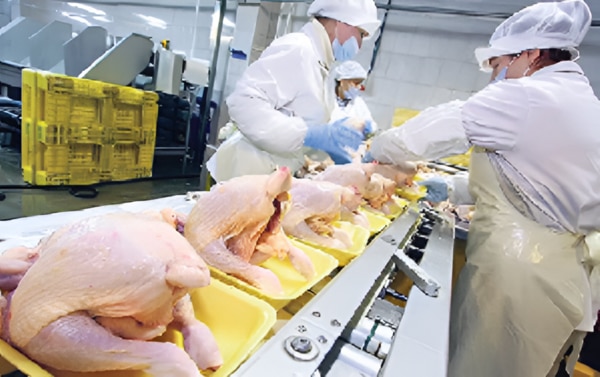
Pusher: A pneumatic piston strikes quickly to slide heavier items (like whole chickens or heavy boxes) off the side of the conveyor.
Air Jet: A high-speed blast of compressed air blows lightweight items off the line without any physical contact, ideal for delicate items or high-speed lines.
Primary Benefits of Automated Grading
High Throughput: Automated lines can sort thousands of pieces per hour (often measured in tons per hour for food industries), a speed impossible to match manually.
Flawless Consistency: Eliminates human error, fatigue, and subjective bias in determining whether a product is “large” or “premium.”
Enhanced Hygiene: In raw meat, seafood, and food processing, automation minimizes human physical contact with the food, lowering the risk of bacterial contamination.
Optimized Profitability: Allows facilities to sell premium, perfectly uniform batches at higher market rates while ensuring bulk packages don't accidentally contain oversized, expensive pieces.