Meat Grading
Description
The system operates continuously, moving meat portions through a high-speed inspection and routing loop:
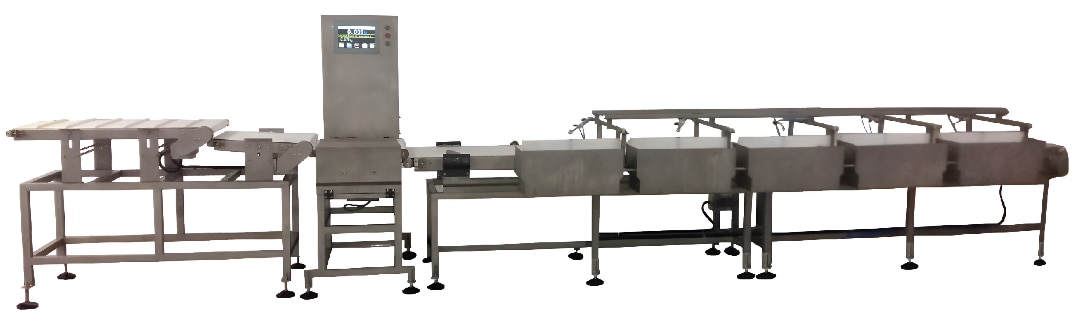
Infeed & Singulation: Cut portions of meat are placed onto an infeed flat belt conveyor. The conveyor typically accelerates slightly to create a physical gap (singulation) between each piece so they can be processed individually.
Dynamic Inspection: As the meat moves down the line, it passes through an inspection zone without stopping:
In-Line Weighing: High-speed dynamic load cells (like a checkweigher) capture the exact weight of the wet, moving meat in milliseconds.
Vision Systems: Smart overhead cameras scan the portion to analyze surface area, fat-to-lean ratios, thickness, or overall dimensions.
Smart Categorization: A central Programmable Logic Controller (PLC) instantly matches the sensor data against predefined weight brackets or size rules and assigns each portion a specific grade.
Gentle Diverting: Mechanical gates, sweeping arms, or heavy-duty pneumatic pushers are triggered at the precise millisecond the meat reaches its designated channel, sliding it into a corresponding collection bin, tray, or crate.
Critical Engineering Requirements
Automating the grading of raw meat presents harsh environmental and material challenges:
Sanitary “Washdown” Design: Raw meat processing environments are cold, wet, and highly prone to bacterial growth. Systems like the Pico Sorting & Grading System are engineered using Stainless Steel (SS304 or SS316) and IP69K-rated waterproof electronics. This allows production teams to sanitize the entire machine daily using high-pressure hot water and chemical foam.
Hygiene and Material Selection: Standard fabric belts absorb moisture and trap bacteria. Meat grading systems use specialized food-grade polyurethane (PU) belts or open-mesh modular plastic belts that do not absorb blood or moisture and release sticky raw meat cleanly when diverted.
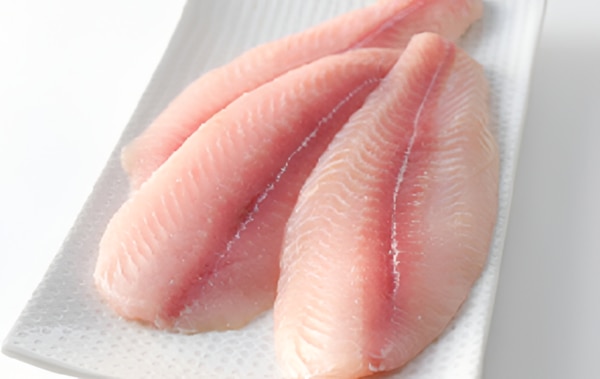
Heavy-Duty Durability: While delicate items like fish fillets require sweeping arms, bulk meat operations handling large beef primitives or pork loins require robust, high-force pneumatic pushers to transfer heavy weight efficiently.
Key Benefits for Meat Processors
Eliminates Product “Giveaway”: When packing fixed-weight trays for supermarkets, precise automated grading ensures the total weight hits the target exactly. This stops profit loss from accidentally overpacking extra meat into the tray.
Consistent Quality Control: Automated vision grading screens for visual defects, discoloration, or incorrect fat trimming, ensuring that only premium cuts make it into premium boxes.
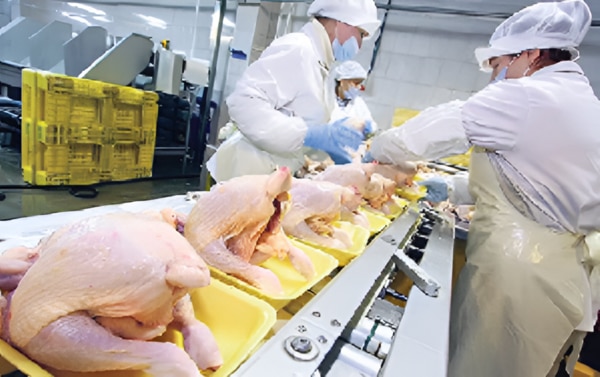
Extended Product Shelf Life: By replacing manual handling with automated conveyors and diverters, human physical contact with raw meat is drastically reduced. This lowers the risk of cross-contamination and improves overall food safety scores.
High-Volume Throughput: Automated systems comfortably process multiple tons of meat per hour, keeping up with high-speed slaughter and fabrication lines that manual sorting teams cannot match.